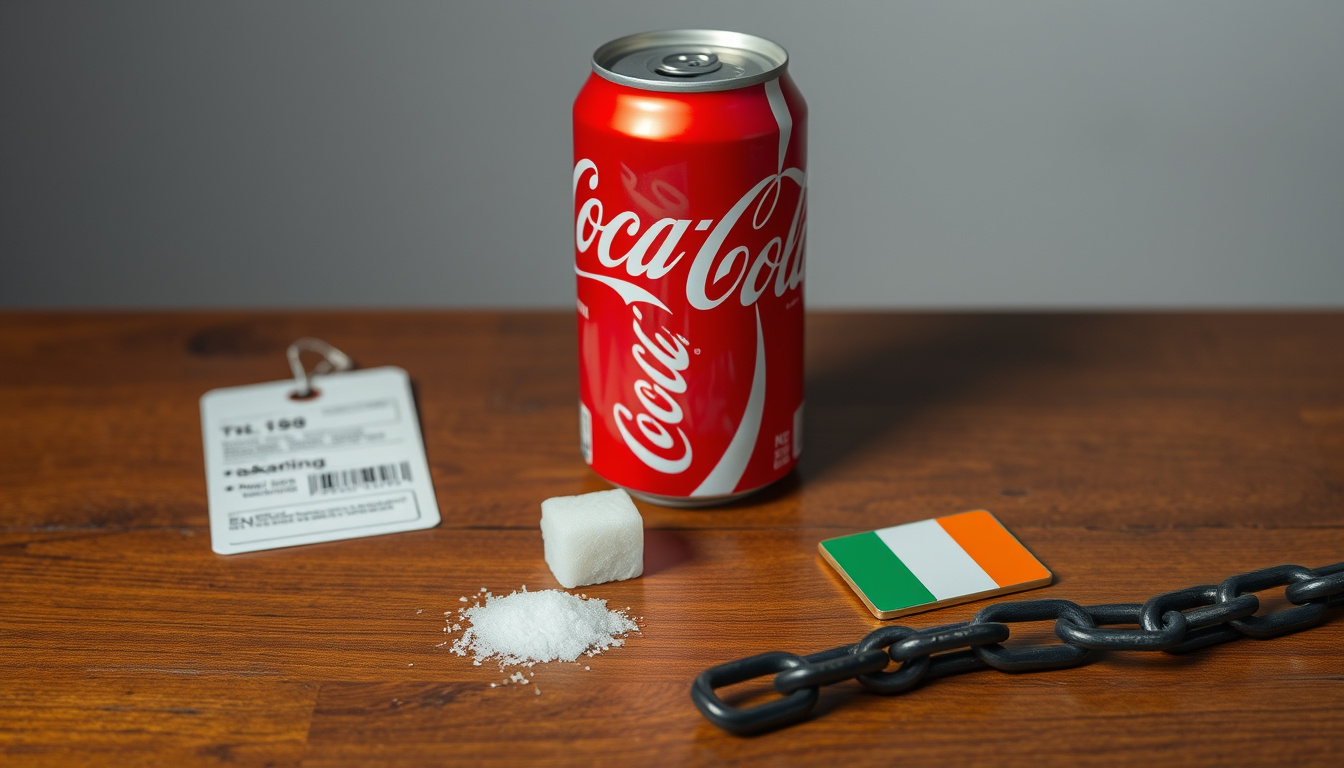
Pick up a can of Coke in Dublin and you’re holding 330 ml, while the same brand in the US comes in 355 ml. That small difference opens up a bigger story about how markets, activism, and even taste divide opinion.
Standard can size in Europe: 330 ml ·
Standard can size in the US: 355 ml ·
Average price of a single Coke can in Ireland: €1.85 ·
Year Coca‑Cola was introduced: 1886 ·
Year New Coke was launched: 1985
Quick snapshot
- European standard can is 330 ml (The Canmaker (industry trade body))
- US standard can is 355 ml (The Canmaker)
- Single can at SuperValu Ireland costs €1.85 (SuperValu (Irish grocery chain))
- Exact sweetener ratio behind taste differences — Coca‑Cola does not publicly confirm its formula per market.
- Actual sales impact of the Irish boycott: no official revenue data released.
- Whether the sleek can design alters drinking experience.
- February 2025: Coca‑Cola launches the 330 ml Sleek Can in Ireland (Forecourt Retailer (trade news))
- 2024–2025: Boycott movement gains momentum in Ireland. (Forecourt Retailer (trade news))
- If the boycott persists, supermarket shelf space for Coke may shrink further.
- Health awareness campaigns could continue to push consumers toward lower‑sugar options.
The 330 ml can is not a boycott signal — it’s the European standard. Yet in Ireland, every packaging change is now read through a political lens, making even a taller, sleeker can a flashpoint for consumer activism.
Why are cans of soft drink standardised at 330ml?
The 330 ml can is the default in Europe because the beverage industry adopted metric sizing decades ago. In the United States, the 355 ml (12 fl oz) can remains the standard, a holdover from imperial measurement traditions. According to The Canmaker (industry authority), a 330 ml can holds about 7 % less liquid than a 355 ml can — small enough to go unnoticed by most drinkers but large enough to matter in bulk pricing.
Why are some cans 355 ml?
- Imperial legacy: The 12 fl oz can (355 ml) was standardised in the US before metrication. Canadian and Mexican markets also use 355 ml.
- Regional production: Filling lines are calibrated for local norms; changing a line costs millions, so the sizes persist.
What determines can sizes in different regions?
- Measurement systems: Metric vs imperial remains the primary driver.
- Trade agreements: EU-wide standards encourage 330 ml; NAFTA/US trade kept 355 ml.
- Consumer expectations: Shoppers in each region expect a certain volume from a “standard” can.
The implication: what looks like a simple can is really a product of history, economics, and regulation — and Irish consumers now hold a 330 ml can that is identical to most of Europe but noticeably smaller than an American visitor’s fridge.
For an Irish shopper, the 330 ml can is not a shrinkflation trick — it has been the norm for decades. But when comparing prices with US travel content, the 7 % volume gap means a like‑for‑like price comparison always needs a conversion.
How much is a can of Coke in Ireland?
Pricing varies by retailer and pack size. At SuperValu (Irish grocery chain), a single 330 ml can is €1.85. Tesco Ireland offers a 12‑pack of 330 ml cans for €10.00 with a Clubcard, while Musgrave Marketplace (wholesale distributor) lists 24‑pack cases for wholesale customers. Prices include a small deposit fee under Ireland’s Deposit Return Scheme.
What is the price at Tesco Ireland?
- 12×330 ml pack: €10.00 (Clubcard price) – about €0.83 per can.
- Single can: Typically €1.65–€1.85 depending on the store.
How does the price compare across retailers?
- Discount grocers like Lidl and Aldi often sell own‑brand cola for under €0.50 per can but stock Coca‑Cola at similar prices to SuperValu.
- Off‑licences and convenience stores charge a premium, sometimes over €2.00 per can.
Are there deals for 24‑can packs?
Wholesale clubs like Musgrave Marketplace offer 24‑packs, but the per‑can saving is modest — roughly €0.75 per can versus €0.83 in a 12‑pack. The Deposit Return Scheme adds a refundable deposit of about €0.15 per can.
The catch: the cheapest way to buy Coke in Ireland is still a 12‑pack with a loyalty card, and the price per litre is roughly double what US consumers pay.
Why are the Irish boycotting Coke?
Since 2024, a growing consumer movement in Ireland has called for a boycott of Coca‑Cola over the company’s operations in Israel. The campaign, promoted by groups such as the BDS Movement (Palestinian-led boycott initiative), argues that Coca‑Cola’s presence in Israeli-occupied territories violates international norms. Social media posts, including an Instagram reel (consumer activism content), have amplified the call to avoid the brand.
What triggered the boycott?
- Coca‑Cola’s bottling franchise in Israel and its sales in West Bank settlements drew criticism from pro‑Palestinian groups.
- Irish consumers, historically active in solidarity campaigns, picked up the cause.
How has the boycott affected sales?
No official revenue data has been published. However, media reports note that some Irish supermarkets have reduced shelf space for Coca‑Cola products. Forecourt Retailer’s coverage of the sleek‑can launch in February 2025 makes no mention of a boycott, suggesting the packaging change is a routine product update rather than a response to protest.
Is the boycott still ongoing?
Yes, as of early 2025 the online campaign continues, though its real effect on Coca‑Cola Ireland’s bottom line remains unclear. The 330 ml sleek can launch went ahead as planned across all major brands (Coke, Sprite, Fanta).
What this means: the boycott is a real consumer sentiment but has not yet forced a measurable shift in corporate strategy. The new can is a packaging upgrade, not a concession.
Is drinking cola good for you?
The short answer: not really, but occasional consumption is unlikely to harm most people. A 330 ml can of regular Coke contains about 35 g of sugar — roughly 9 teaspoons. WebMD (health information publisher) warns that high sugar intake is linked to obesity, type 2 diabetes, and tooth decay.
What are the health risks of drinking two Cokes a day?
- Weight gain: Two cans add 280 empty calories daily — enough to gain about 1 kg per month if not offset.
- Bone density: Phosphoric acid in cola may leach calcium from bones, especially in women (WebMD).
- Blood sugar spikes: Rapid glucose surges increase insulin demand and, over time, can lead to insulin resistance.
Does Coca‑Cola have any nutritional benefits?
Regular Coke provides no vitamins, minerals, or fibre. Diet Coke contains no sugar but uses artificial sweeteners (aspartame, acesulfame K), which have mixed health evidence — some studies suggest they may alter gut bacteria or trigger sugar cravings. For a comprehensive overview of the hospital, consult our St James’s Hospital Dublin guide. St James’s Hospital Dublin guide
The trade-off: a single can occasionally is fine for most adults; daily consumption, especially two or more, carries real risks. Diet versions remove sugar but introduce other uncertainties.
Irish consumers who drink two 330 ml cans a day already consume 70 g of added sugar from Coke alone — more than the WHO’s recommended maximum of 50 g. The health cost is cumulative.
Why does Coke taste different in Ireland?
Many travellers notice that Coke tastes sweeter and less syrupy in Europe than in the US. The likely reason: sweetener composition. In the United States, Coca‑Cola is sweetened with high‑fructose corn syrup (HFCS). In Ireland and most of Europe, the company uses cane sugar or a sugar‑sweetener blend. Coca‑Cola’s official FAQ (brand information) acknowledges regional recipe adjustments to match local taste preferences and ingredient availability.
Does Coke taste different in Europe than in the U.S.?
- Sweetener: HFCS (US) vs cane sugar (EU) — the primary difference.
- Acidity: European Coke may have slightly different phosphoric acid levels, affecting tartness.
- Carbonation: Some consumers report that European Coke is less fizzy, though this is anecdotal.
What ingredients cause the flavour variation?
- HFCS is sweeter and cheaper than cane sugar but leaves a different mouthfeel.
- Cane sugar provides a cleaner, less cloying sweetness.
- Coca‑Cola’s “secret” flavouring oils (cinnamon, nutmeg, citrus) are the same globally, but the sweetener base changes the perception.
The pattern: what Irish drinkers call “normal Coke” is, chemically, a different product from the American version. That’s why a can bought in Dublin tastes noticeably different from one bought in New York.
“The taller, more stylish 330 ml can will be introduced to the market in February.”
— Coca‑Cola Ireland official statement, as reported by Forecourt Retailer (trade news outlet)
“Excessive cola consumption may lead to health problems such as obesity and bone density loss.”
— WebMD (health information publisher)
The table below compares the key specifications of the European 330 ml can and the US 355 ml can, highlighting differences in volume, sweetener, and nutritional content.
| Specification | 330 ml can (Europe) | 355 ml can (US) |
|---|---|---|
| Volume | 330 ml | 355 ml |
| Height | 115 mm (approx) | 122 mm (approx) |
| Diameter | 66 mm | 66 mm |
| Sweetener | Cane sugar / blend | High‑fructose corn syrup |
| Caffeine per can | 32 mg | 34 mg |
| Calories | 139 | 150 |
| Sugar | 35 g | 39 g |
Upsides
- 330 ml format is consistent across Europe — easy for travellers.
- Cane sugar gives a cleaner taste that many prefer.
- New sleek can design improves grip and aesthetics.
- Moderate consumption (one can occasionally) is generally safe.
- Diet options available for reduced sugar intake.
Downsides
- High sugar content (~9 tsp per can) poses health risks.
- Price in Ireland (€1.85 single) is high compared to US (~$0.60).
- Ongoing boycott creates ethical dilemma for consumers.
- Taste variability between regions can disappoint expected flavour.
- 355 ml US cans hold 7 % more — Irish cans feel smaller.
Timeline
- – Coca‑Cola invented by John Pemberton.
- – Coca‑Cola launches New Coke; later reverts to original formula.
- – Irish consumers begin boycotting Coca‑Cola over company’s operations in Israel.
- – Coca‑Cola introduces the taller 330 ml Sleek Can in Ireland for all its variants. (Forecourt Retailer)
instagram.com, facebook.com, youtube.com, instagram.com, facebook.com
Amidst the ongoing Irish boycott, consumers are increasingly researching the health effects of Coke Zero to inform their purchasing decisions.
Frequently asked questions
Are Coke cans recyclable?
Yes, aluminium cans are infinitely recyclable. Ireland’s Deposit Return Scheme encourages recycling by adding a refundable deposit.
Does Diet Coke contain sugar?
No, Diet Coke uses artificial sweeteners (aspartame and acesulfame K) instead of sugar.
How long does a sealed can of Coke last?
Typically 9–12 months past the production date. The “best before” date is printed on the bottom.
Why do some Coke cans have a red tab?
The red tab was introduced in the 1960s for easier opening. Today all standard Coke cans have it.
Is there a difference between Coke from a can vs a bottle?
Yes — cans are sealed airtight, preserving carbonation longer than plastic bottles. Glass bottles can also affect taste slightly, though the liquid inside is identical.
What is the deposit on a can of Coke in Ireland?
The deposit is €0.15 per can under Ireland’s Deposit Return Scheme.
Can I buy Coke in glass bottles in Ireland?
Yes, limited edition or imported Mexican Coke is sold in glass bottles at some specialist retailers, but the standard offering is cans and plastic bottles.
For Irish consumers, the decision on whether to pick up a Coke can now involves price, health, ethics, and taste all at once. The simplest answer: buy a single can occasionally if the brand fits your values, or switch to a local alternative. Either way, the 330 ml can you hold tells a story that goes far beyond the drink inside.
Related: Farmers Union Greek Yogurt: Real or Style? Nutrition | Loco Love Chocolate Guide: Ingredients, Health & Where to Buy

Rachel Walsh leads fact-checking, source verification and corrections at Aussie Pulse.