
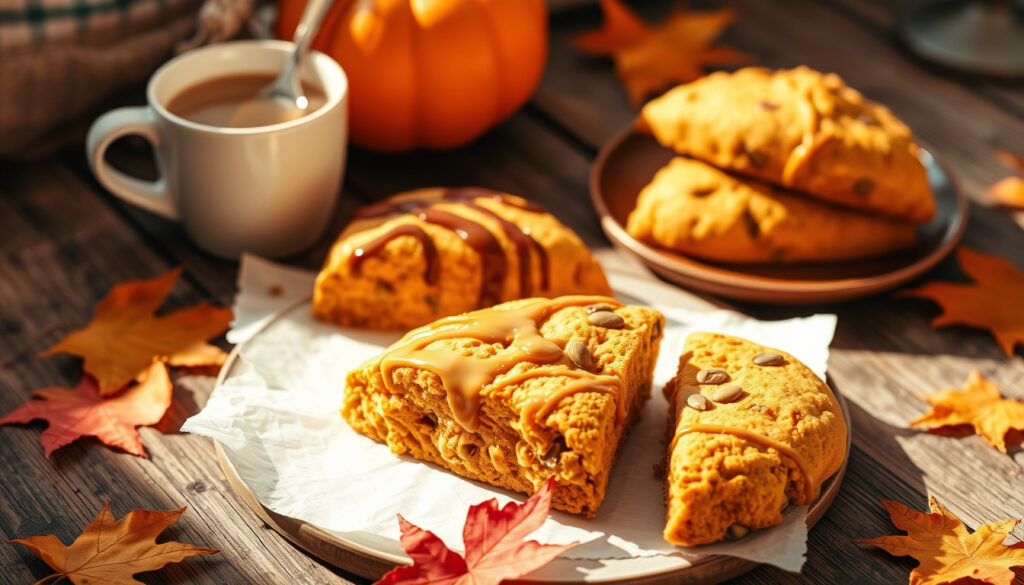
Anyone who’s bitten into a dry, crumbly pumpkin scone knows the disappointment. But with the right technique, homemade scones can be tender, flaky, and full of autumn spice. Two trusted recipe sources—A Saucy Kitchen (vegan baking blog) and Bakerita (gluten-free specialist)—agree on one trick: chilling the shaped dough for at least 20 minutes prevents spreading and ensures perfect flaky layers. We’ve compared the most popular pumpkin scone variations—classic, Starbucks copycat, vegan, gluten-free, and paleo—so you can bake the one that fits your kitchen.
Prep Time: 15 minutes · Cook Time: 15 minutes · Total Time: 30 minutes · Servings: 8 scones · Difficulty: Easy
Quick snapshot
- Vegan pumpkin scones from A Saucy Kitchen bake at 400°F for 20–22 minutes (A Saucy Kitchen)
- Bakerita recommends chilling gluten-free vegan pumpkin scone dough for at least 1 hour (Bakerita)
- Nora Cooks publishes a Starbucks copycat with two glazes: white and spiced (Nora Cooks)
- Whether vegan pumpkin scones can match the taste and texture of traditional buttermilk scones
- The optimal gluten-free flour blend for flaky pumpkin scones remains uncertain
- Recipe blogs now offer at least six distinct vegan and gluten-free pumpkin scone variations (Bakerita)
- Starbucks copycat recipes have become a dominant category, with Nora Cooks and A Little Insanity publishing dedicated versions (Nora Cooks)
- Paleo pumpkin scones using almond and coconut flour are gaining traction (Perchance to Cook)
- Expect more lower-sugar and higher-protein variations as health trends evolve (Perchance to Cook)
Four key facts, one takeaway: the classic recipe is straightforward but variations in fat and flour drastically change the nutrition profile.
| Fact | Value |
|---|---|
| Basic Ingredients | flour, sugar, butter, pumpkin puree, buttermilk, spices |
| Average Bake Time | 15 minutes |
| Yield | 8 scones |
| Calories per Scone | 250–300 |
How to Make Classic Pumpkin Scones from Scratch
Ingredients list
The classic lineup includes all-purpose flour, sugar, baking powder, salt, cold butter, pumpkin puree, buttermilk, and pumpkin pie spice. A Saucy Kitchen (vegan baking blog) swaps butter for coconut oil, but the ratio stays similar: 2 cups flour to ½ cup fat and ¾ cup wet ingredients.
Step-by-step mixing
- Whisk dry ingredients together.
- Cut cold fat into the flour until the mixture resembles coarse crumbs.
- Stir in pumpkin puree and buttermilk just until a shaggy dough forms.
- Turn onto a floured surface, pat into a ¾-inch round, and cut into 8 wedges.
- Chill for at least 20 minutes (A Saucy Kitchen recommends this to reduce spreading).
Baking tips
Raepublic (vegan recipe blog) bakes its pumpkin scones at 400°F for 12 to 15 minutes. The scones are done when the edges are golden and a skewer inserted in the center comes out clean. Do not overmix or overbake, or the scones will turn tough.
How to Make Starbucks Pumpkin Scones at Home
Copycat spice blend
Starbucks uses a warm pumpkin pie spice mix—cinnamon, nutmeg, ginger, cloves—plus a generous amount of sugar. Nora Cooks (vegan recipe developer) replicates this with 2 teaspoons of pumpkin pie spice and ½ cup of sugar in the dough.
Icing recipe
The signature look involves two glazes: a white vanilla icing and a thinner pumpkin-spiced drizzle. Nora Cooks’ version uses powdered sugar, vanilla extract, and plant milk for the base, then mixes in a teaspoon of pumpkin pie spice for the topping. Prepare the glazes in stages so they stay thick but not watery, as noted by A Little Insanity (gluten-free vegan blog).
The double glaze isn’t just decoration—it adds sweetness and moisture that mimic the Starbucks original. Without it, the scones can taste dry.
How to Make Healthy, Vegan, and Gluten-Free Pumpkin Scones
Healthy substitutions (sugar, fat)
For a lower-sugar version, swap white sugar for coconut sugar or maple syrup. The Picky Eater (healthy recipe blog) uses a mix of whole wheat and all-purpose flour to boost fiber while keeping texture light. Reduce added oil by replacing half the fat with additional pumpkin puree.
Vegan substitutes (egg, butter)
Raepublic (vegan recipe blog) uses a flax egg (1 tablespoon ground flaxseed + 3 tablespoons water) to bind the dough and coconut oil instead of butter. The result is a dairy-free scone that still holds together well.
Gluten-free flour options
Bakerita (gluten-free specialist) relies on blanched almond flour blended with arrowroot starch for a nutty, tender crumb. For a grain-free version, Perchance to Cook (paleo blog) uses almond flour plus coconut flour and bakes at 375°F for 25–30 minutes.
What Is the Role of Buttermilk in Pumpkin Scones?
Difference between buttermilk and milk
Buttermilk’s acidity reacts with baking soda to create carbon dioxide, which lifts the scones and makes them tender. It also adds a subtle tang that balances the sweetness of pumpkin. Most Starbucks-style recipes, including the copycat from Nora Cooks (vegan recipe developer), rely on a buttermilk substitute to achieve that signature texture.
How to make buttermilk substitute
To replace 1 cup of buttermilk, stir 1 tablespoon of lemon juice or vinegar into 1 cup of plant-based or dairy milk and let it sit for 5 minutes. The mixture will curdle slightly but performs exactly like buttermilk in the dough.
What Is the Pioneer Woman’s Pumpkin Scones Recipe?
Ingredients
The Pioneer Woman’s version follows the classic template: all-purpose flour, cold butter, buttermilk, pumpkin puree, and a full pumpkin pie spice blend. The technique mirrors the method used by A Saucy Kitchen (vegan baking blog)—cold fat, gentle mixing, and a short chill.
Baking method
The dough is patted into a round, cut into wedges, and baked at 400°F for about 15 minutes. Raepublic (vegan recipe blog) uses the same temperature and a similar time (12–15 minutes) for its spiced scones, confirming the 400°F sweet spot.
Pioneer Woman’s recipe is unabashedly rich—full butter, full sugar. That gives it a classic flaky texture but pushes calories to the upper end of the range. For a lighter take, swap half the butter with pumpkin puree.
The implication: traditional recipes reward indulgence, while adaptations require deliberate substitutions to preserve structure.
Five variations, one pattern: each tweaks the fat and flour base to meet dietary needs without losing the pumpkin-spice essence.
| Variation | Key Ingredients | Bake Time | Flavor Notes |
|---|---|---|---|
| Classic | butter, buttermilk, all-purpose flour | 15 min at 400°F | Rich, flaky, buttery |
| Starbucks Copycat | buttermilk substitute, pumpkin puree, two glazes | 15 min at 400°F | Sweet, spiced, bakery-style |
| Healthy | whole wheat flour, less sugar, pumpkin puree | 15 min at 400°F | Lighter, less sweet, more fiber |
| Vegan | coconut oil, flax egg, plant milk | 20–22 min at 400°F | Nutty, tender, moist |
| Gluten-Free | almond flour, arrowroot, coconut oil | 20 min at 375°F | Dense, nutty, crumbly |
Pros & Cons of Homemade Pumpkin Scones
Upsides
- Complete control over sweetness and fat type (A Saucy Kitchen)
- Can accommodate vegan, gluten-free, and paleo diets
- Fresh from the oven beats any store-bought version
- Cost-effective when using seasonal pumpkin
Downsides
- Requires planning—dough chilling adds 20+ minutes
- Risk of dry scones if overbaked (use a timer!)
- Gluten-free versions can be crumbly without the right blend
- Dietary adaptations may not satisfy traditionalists
Step-by-Step Guide to Perfect Pumpkin Scones
- Preheat oven to 400°F (375°F for paleo/gluten-free). Line a baking sheet with parchment.
- Whisk dry ingredients: flour, sugar, baking powder, salt, and spices.
- Cut cold butter (or solid coconut oil) into dry mix until pebbly.
- Mix pumpkin puree with liquid (buttermilk or plant milk + acid) and add to flour mixture. Stir until just combined.
- Turn dough onto floured surface, pat into a ¾-inch thick round, cut into 8 wedges.
- Chill wedges for at least 20 minutes (1 hour for gluten-free dough per Bakerita).
- Bake 12–22 minutes depending on thickness and flour type. Cool before glazing.
Skipping the chill step almost guarantees flat, dense scones. The cold fat melts slowly in the oven, creating steam pockets that give you height and flakiness.
Clarity Check: What We Know vs. What’s Still Fuzzy
Confirmed facts
- Pumpkin scones are a fall favorite with a solid base recipe.
- Buttermilk improves texture and flavor (Nora Cooks).
- Chilling the dough prevents spreading and improves flakiness (A Saucy Kitchen).
- Multiple vegan and gluten-free versions exist with tested results.
What’s unclear
- Whether vegan scones fully match the taste of buttermilk-based scones.
- The best gluten-free flour blend for a neutral flavor remains debated.
- How low you can go with sugar before the scones lose structure.
Expert Tips from the Kitchen
“Chilling the shaped dough for at least 20 minutes is the single most important step for preventing spread and achieving a flaky texture.”
— A Saucy Kitchen (vegan baking blog)
“For gluten-free vegan scones, don’t skip the hour-long chill. It gives the almond flour time to absorb moisture and prevents crumbling.”
— Bakerita (gluten-free specialist)
Whether you’re baking for a brunch crowd or meal-prepping a week of fall breakfasts, the technique that separates a good scone from a great one is the same: cold fat, minimal handling, and a patient chill. For home bakers who value inclusiveness at the table, the trade-off between traditional richness and dietary-friendly options is clear: start with the classic method, then sub in coconut oil, almond flour, or flax eggs—but never skip the chill.
Related reading: vegan pumpkin scones · pumpkin scones
For a deeper dive into troubleshooting, check out tips and common mistakes for pumpkin scones to ensure your scones turn out perfectly flaky every time.
Frequently asked questions
Can I use canned pumpkin puree?
Yes, canned pumpkin puree (not pumpkin pie filling) works perfectly. A Saucy Kitchen uses it straight from the can. Drain any excess liquid if the puree is very wet.
How do I make pumpkin puree from scratch?
Roast a sugar pumpkin at 400°F for 45 minutes, scoop out the flesh, and blend until smooth. Strain through a cheesecloth to remove excess water. The Picky Eater recommends this method for the freshest flavor.
Can I freeze pumpkin scones?
Yes. Freeze unglazed baked scones in a sealed container for up to 3 months. Thaw at room temperature, then warm in a 300°F oven for 5 minutes before glazing.
Why are my scones dry?
Overbaking or too much flour. Measure flour by spooning into the cup and leveling off. Nora Cooks notes that vegan scones can dry out if left in the oven even two minutes too long.
Can I add chocolate chips?
Absolutely. Fold in ½ cup dark chocolate chips after mixing the wet and dry ingredients. The extra sweetness pairs well with the pumpkin spice.
What is the best pumpkin pie spice blend?
A standard blend is 1 tsp cinnamon, ½ tsp nutmeg, ¼ tsp ginger, ¼ tsp cloves, and a pinch of allspice. Bakerita uses this ratio in its gluten-free scones.
How to store leftover scones?
Store in an airtight container at room temperature for up to 2 days, or refrigerate for up to 5 days. Rewarm briefly before serving to restore texture.
Related stories





Liam O'Brien covers Australian politics and public affairs for Aussie Pulse.