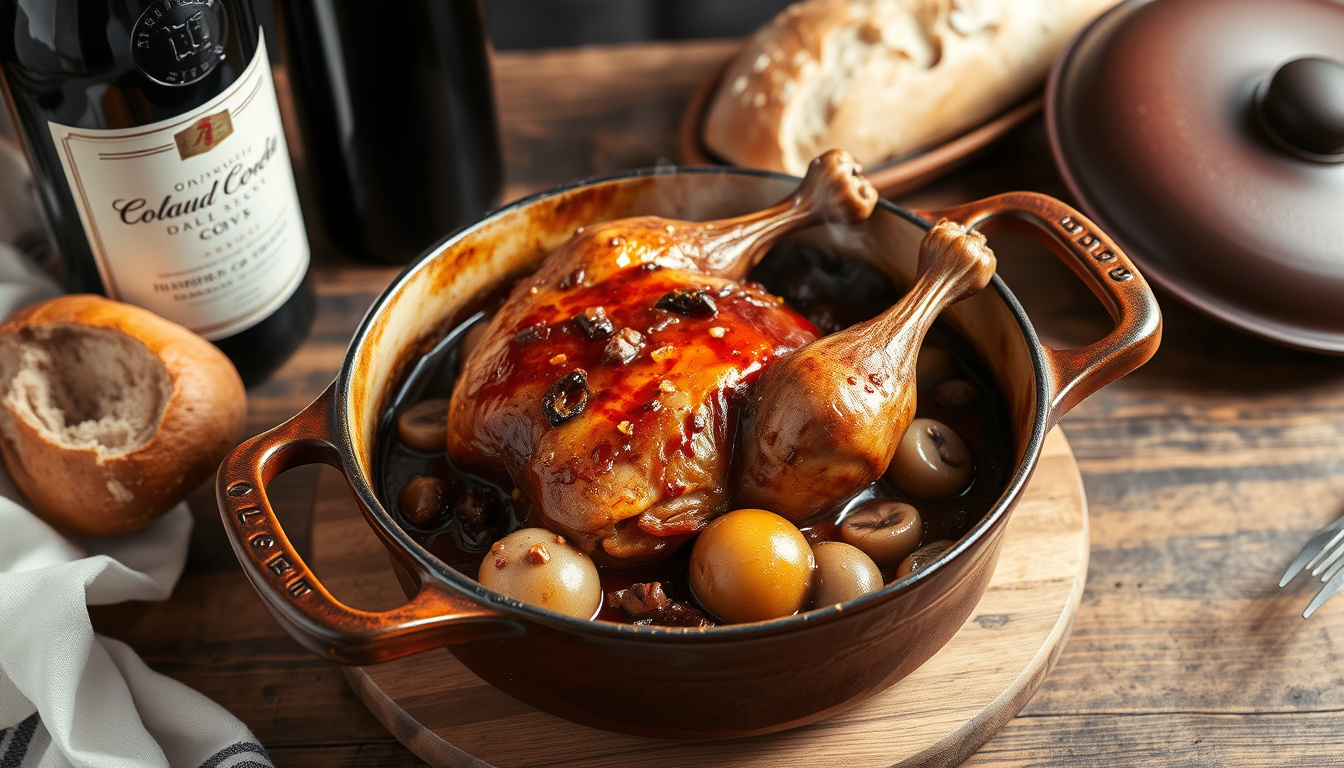

Coq au vin, literally meaning “rooster in wine,” represents one of France’s most celebrated braised chicken dishes. This hearty stew traces its roots to the Burgundy region, where generations of home cooks transformed tough old roosters into tender, flavor-packed meals by slow-cooking them in local red wine. The technique of braising in wine not only tenderized the fibrous meat but also created the dish’s signature deep, glossy sauce that has captivated palates for centuries.
While the dish began as humble peasant fare, coq au vin underwent a remarkable transformation in the mid-20th century. Julia Child introduced the preparation to American kitchens through her landmark 1961 cookbook, elevating it to a cornerstone of French culinary repertoire. Today, the dish appears on restaurant menus worldwide, though home cooks continue to honor its rustic origins by preparing it with patience and quality ingredients.
Understanding coq au vin means appreciating how simple components—chicken, wine, bacon, and aromatics—unite through slow cooking into something far greater than their individual parts. The dish demonstrates how traditional French cuisine transforms everyday ingredients into extraordinary meals through technique rather than complexity.
What Is Coq au Vin?
Coq au vin is a traditional French stew featuring chicken braised in red wine with bacon, mushrooms, and aromatic vegetables. The name derives from the two principal ingredients: “coq” referring to rooster (though modern versions typically use chicken) and “vin” meaning wine. The dish exemplifies the French principle of haute cuisine emerging from rustic traditions, where careful preparation transforms humble components into refined fare.
Key Insights
- Use a full-bodied Pinot Noir or Burgundy that you would drink straight
- Marinating overnight allows the wine to tenderize the chicken and deepen flavors
- Julia Child popularized coq au vin in the United States through her 1961 cookbook
- Dark meat outperforms chicken breasts in this dish for superior tenderness
- Bacon fat provides essential flavor base for browning the chicken
- Refrigerating overnight after cooking significantly enhances the final taste
- Regional variations exist throughout France, using local wines including champagne
| Fact | Detail |
|---|---|
| Literal Meaning | Rooster in wine |
| Classic Wine | Burgundy red (Pinot Noir) |
| Servings | 4-6 people |
| Calories per Serving | Approximately 500 |
| Origin Era | Medieval roots, refined over centuries |
| Traditional Cut | Bone-in, skin-on dark meat |
How to Make Traditional Coq au Vin
Creating authentic coq au vin requires patience and attention to building flavors through distinct stages. The process involves rendering bacon, browning chicken, creating a rich wine-based sauce, and braising everything together until the meat reaches fall-off-the-bone tenderness. Each step contributes to the final depth of flavor that characterizes exceptional coq au vin.
Essential Ingredients
The foundation of coq au vin relies on quality components coming together in harmony. Bone-in, skin-on chicken pieces—particularly thighs and drumsticks—provide the best results because the dark meat remains moist during extended braising. Using 2-3 cups of dry red wine forms the sauce base, with Burgundy, Pinot Noir, or Beaujolais serving as traditional choices.
Quarter to half a pound of bacon, cut into matchstick-sized lardons, adds smoky depth and provides fat for searing. Aromatics include 1-2 cups of onions (yellow, pearl, or shallots), 1-2 carrots, 3-4 cloves of garlic, 5-8 sprigs of thyme, and 1-2 bay leaves. Tomato paste (2-3 tablespoons), chicken stock (1-3 cups), one pound of cremini or brown mushrooms, butter, and flour for thickening complete the ingredient list.
For an optional flavor enhancement, some cooks add half an ounce of dark chocolate to the sauce. This addition, found in certain traditional preparations, contributes subtle richness without noticeable sweetness.
The Step-by-Step Method
Begin by rendering the bacon in a Dutch oven over medium heat until the fat releases and the pieces turn crispy. Remove the bacon and reserve it, leaving the fat in the pot. Season the chicken pieces with salt and pepper, then sear them in the bacon fat for approximately 5 minutes per side until deeply golden. Transfer the chicken to a plate and set aside.
In the remaining fat, sauté the onions, carrots, and garlic until softened and fragrant. Stir in the tomato paste and cook for one minute to eliminate its raw flavor. Deglaze the pot with the reserved wine, scraping up the browned bits (fond) from the bottom—these caramelized remnants contain concentrated flavor essential for the final dish. Add the chicken stock, thyme, and bay leaves, then return the chicken and bacon to the pot.
For optimal results, the dish can be transferred to a 325-350°F oven for 40-60 minutes of braising. This indirect heat ensures even cooking and allows the sauce to develop without excessive reduction. Alternatively, maintain a gentle simmer on the stovetop with regular monitoring.
While the chicken braises, sauté the mushrooms separately in butter until golden brown. Once the chicken becomes tender, remove it from the pot and thicken the sauce using a beurre manié—a paste of flour and softened butter worked together. Stir this mixture into the simmering liquid until the sauce reaches coating consistency. Return the chicken and mushrooms to the pot, and optionally flambé with 2-3 tablespoons of brandy for added depth.
Many chefs recommend refrigerating the completed coq au vin overnight before serving. This resting period allows the flavors to meld and the wine notes to mellow, producing a more harmonious dish. Reheat gently before serving, and the total active and passive cook time typically reaches 2-3 hours.
History and Origins of Coq au Vin
The origins of coq au vin stretch back to medieval France, where the dish served as practical peasant food. Rural families kept roosters for breeding purposes, and when these birds became too tough and old for roasting, creative cooks discovered that extended braising in wine transformed the fibrous meat into something tender and palatable. The wine served dual purposes: breaking down collagen in the connective tissues while infusing the meat with complex flavors.
From Peasant Fare to French Classic
Throughout the 19th century, coq au vin remained primarily regional French comfort food, prepared in homes throughout Burgundy and neighboring provinces. Different regions developed their own variations, using whatever local wine was available. Some areas employed champagne in the dish, creating a white wine version that demonstrated the recipe’s adaptability to regional ingredients.
The dish’s transformation into a symbol of French culinary excellence occurred in the 1960s, largely due to Julia Child’s influence. Her 1961 publication of Mastering the Art of French Cooking introduced American home cooks to authentic French techniques. Child’s detailed instructions for coq au vin—alongside her television appearances—brought the dish into mainstream American consciousness and established it as a benchmark of French home cooking.
Julia Child famously described coq au vin as “one of the great braises,” cementing its status alongside other French classics like boeuf bourguignon and cassoulet. Her endorsement transformed regional peasant cooking into international culinary prestige.
Best Wine and Essential Tips for Coq au Vin
Selecting the appropriate wine represents the most critical decision in preparing coq au vin. The wine used in cooking becomes the dominant flavor in the finished dish, making quality considerations essential. Avoid “cooking wine” products, which contain added salt and lack the complexity needed for excellent results.
Choosing the Right Wine
Burgundy and Pinot Noir stand as the traditional choices, offering medium body with sufficient acidity to cut through the dish’s richness. These lighter red wines complement the chicken without overwhelming other flavors. Beaujolais provides an accessible alternative that works beautifully in the dish. The general principle: if you wouldn’t drink the wine on its own, it won’t improve your coq au vin.
Avoid heavy, tannic wines like Cabernet Sauvignon, which can make the dish taste bitter and mask the subtle aromatics. The goal involves selecting a wine that echoes the dish’s Burgundy heritage while remaining balanced enough to harmonize with all components.
Technique Tips for Success
- Never skip browning the chicken in bacon fat—this step builds the foundation of flavor
- Scrape up all the browned bits (fond) when deglazing for maximum depth
- Cook vegetables and mushrooms separately to maintain their distinct textures
- Bone-in, skin-on pieces deliver superior flavor and moisture compared to boneless cuts
- Dark meat outperforms chicken breasts, which tend to dry out during braising
- Use the beurre manié technique for smooth sauce thickening without lumps
- Allow the dish to rest overnight—the flavors improve substantially
A heavy-bottomed Dutch oven proves ideal for coq au vin preparation. The even heat distribution prevents hot spots that could scorch the sauce, while the tight-fitting lid maintains proper moisture levels throughout braising.
Modern Adaptations
Contemporary cooks have adapted traditional coq au vin for various cooking appliances. Pressure cookers and Instant Pots can produce the dish in significantly less time—typically 20-25 minutes under high pressure followed by natural release. While this approach sacrifices some depth achieved through extended braising, it offers a practical weekday alternative.
Slow cookers accommodate the dish for those preferring minimal active cooking time. However, most slow cooker versions recommend browning the chicken and aromatics first to develop flavor foundations before the extended low-heat cooking phase.
Variations and What to Serve with Coq au Vin
Regional variations throughout France demonstrate the dish’s flexibility with local ingredients. While Burgundy versions stick to the traditional red wine preparation, other areas have developed distinct interpretations using their signature products. Champagne coq au vin from the Champagne region showcases how white wine can substitute for red while maintaining the dish’s essential character.
Comparing Similar Dishes
Chicken cacciatore represents the Italian equivalent, featuring tomatoes, herbs, and white wine in its preparation. While both dishes share the concept of braised chicken with wine, their flavor profiles differ significantly—cacciatore offers brighter, more acidic notes from tomato, while coq au vin provides deeper, more somber richness from red wine and bacon.
Boeuf bourguignon essentially applies the same technique to beef rather than chicken, using similar wine, bacon, and mushroom components. This connection highlights how the wine-based braising method transcends individual proteins, representing a foundational French cooking technique rather than a recipe bound to one ingredient.
Serving Suggestions
The rich, glossy sauce demands starches capable of absorbing every drop. Creamy mashed potatoes provide classic comfort-pairing, while crusty French bread offers rustic appeal. Egg noodles, polenta, or buttered rice also work beautifully, each providing a different textural experience with the velvety sauce.
Fresh parsley garnish adds color and slight freshness to contrast the dish’s richness. For wine service, echoing the dish’s cooking wine makes perfect sense—serving Pinot Noir or Burgundy alongside coq au vin creates a harmonious dining experience that celebrates the ingredient’s starring role.
The Evolution of Coq au Vin Through Time
- Middle Ages — Peasant dish using old roosters braised in local wine to tenderize tough meat
- 19th Century — Recipe refined and codified in French regional cuisine, appearing in early cookbooks
- Early 20th Century — Continued prominence in Burgundian cooking while remaining relatively unknown internationally
- 1961 — Julia Child publishes Mastering the Art of French Cooking, introducing coq au vin to American audiences
- 1960s-1970s — Dish gains popularity in American fine dining as French cuisine becomes fashionable
- Present Day — Global variations emerge while traditional preparations maintain their prestige; pressure cooker adaptations expand home accessibility
What We Know and What Remains Unclear
Established Information
- Rooster braised in wine originated in Burgundy region of France
- Wine tenderizes tough meat through extended cooking
- Julia Child popularized the dish internationally in 1961
- Core ingredients include chicken, red wine, bacon, and mushrooms
- Regional variations exist using local wines throughout France
- The dish improves significantly with overnight resting
Elements Requiring Further Research
- Precise medieval recipe specifications remain undocumented
- Whether original preparations used additional ingredients now lost to history
- Specific timeline of how the dish spread beyond Burgundy
- How much Julia Child’s recipe varied from authentic French regional preparations
- Whether cooking wine was ever considered acceptable historically
The Cultural Significance of Coq au Vin
Coq au vin exemplifies how French cuisine elevated humble ingredients through technique and patience. The dish represents a philosophy of cooking that values transformation over complexity—taking what might seem ordinary and revealing its hidden potential through understanding heat, time, and combination.
The peasant-to-gourmet trajectory of coq au vin mirrors broader patterns in culinary history, where dishes originating from necessity became symbols of culinary sophistication. This evolution raises interesting questions about what makes food “fine” versus “simple,” suggesting that technique and intention matter more than ingredients or presentation.
Wine’s role in the dish extends beyond flavoring—it performs the essential chemical work of breaking down collagen in the chicken, converting tough connective tissue into silky gelatin. This scientific foundation explains why the wine selection impacts not just taste but also the final texture of the meat and sauce.
What Chefs and Sources Say
“Coq au vin is one of the great braises.”
— Julia Child
Julia Child’s assessment has been echoed throughout culinary literature, with Larousse Gastronomique—the authoritative French culinary encyclopedia—formally defining the dish as chicken braised in red or white wine with lardons and mushrooms. The convergence of professional recognition and home cook accessibility has secured coq au vin’s position as a timeless classic.
Contemporary chefs continue to reinterpret the dish while respecting its foundations. Recipe testing by culinary scientists has validated traditional techniques while identifying optimal temperatures and timing for home kitchens. These modern validations confirm what French home cooks have known for generations: patience and quality ingredients produce exceptional results.
Bringing It All Together
Coq au vin remains a testament to the transformative power of traditional French cooking techniques. From its peasant origins in Burgundy to its current status as an international favorite, the dish proves that exceptional food need not require exceptional complexity. The combination of quality wine, proper technique, and patient braising creates flavors that simply cannot be rushed.
Whether prepared Julia Child’s way or adapted for modern appliances, coq au vin rewards those who invest the time and attention it deserves. The effort yields a dish rich in history and flavor—one that connects contemporary cooks to centuries of French culinary tradition. For those seeking to expand their repertoire of braised dishes, exploring related preparations like Korean Fried Chicken or understanding foundational stocks through Bone Broth Benefits can provide valuable complementary skills.
Frequently Asked Questions
What is the difference between coq au vin and chicken cacciatore?
Coq au vin uses red wine, bacon, and mushrooms, while chicken cacciatore is an Italian dish featuring tomatoes, herbs, and typically white wine. The cooking method differs slightly, with cacciatore offering brighter, more acidic flavors compared to coq au vin’s deeper, richer profile.
Can coq au vin be frozen for later use?
Coq au vin freezes exceptionally well for up to three months. The flavors often improve after freezing and thawing, as the extended time allows the components to meld further. Store in airtight containers and reheat gently on the stovetop or in a 325°F oven.
Is coq au vin difficult to make?
Coq au vin requires intermediate cooking skills but presents no particularly challenging techniques. The primary demands involve time and patience rather than technical expertise. Home cooks comfortable with braising and sauce-making should find the dish entirely approachable.
What wine pairs best with coq au vin?
Pinot Noir and Burgundy make ideal pairings, echoing the wine used in cooking. These lighter red wines complement the dish’s richness without overwhelming it. If serving something different, aim for medium-bodied reds with good acidity.
How long does coq au vin take to cook?
Total preparation time ranges from 2-3 hours of active and passive cooking, not including the optional overnight marinade or rest period. The dish genuinely benefits from being prepared ahead, making it excellent for entertaining.
Can I make coq au vin in a slow cooker?
Slow cooker adaptation is possible by browning the chicken and aromatics first on the stovetop, then cooking on low for 6-8 hours. Browning remains essential for developing the flavor foundation, even when using a slow cooker for the braising phase.
Does coq au vin have to use rooster?
Traditional recipes called for rooster because the tough old birds benefited most from braising. Modern preparations universally use regular chicken, typically favoring dark meat thighs and drumsticks for superior tenderness compared to breast meat.
Related stories



Ben Singh covers culture, lifestyle and society across Australia for Aussie Pulse.