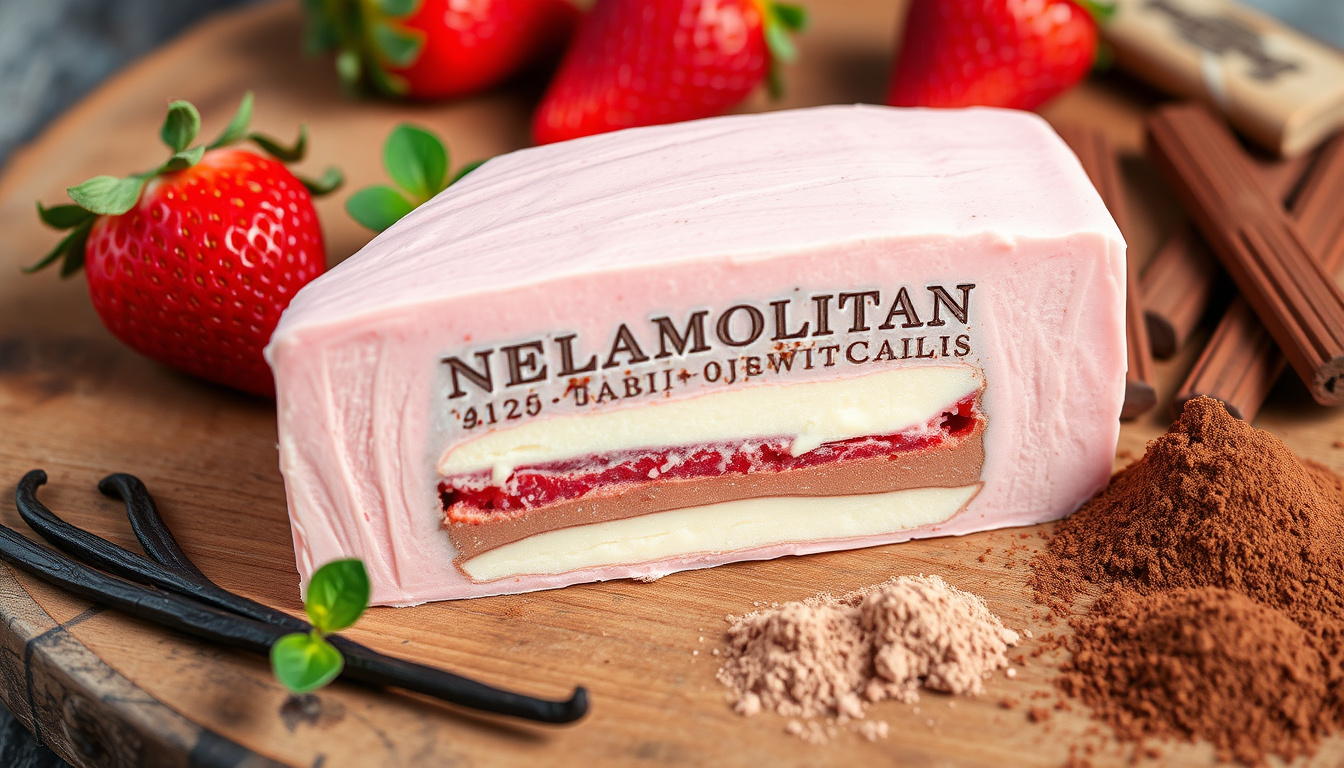

Neapolitan ice cream represents one of the most recognizable frozen desserts in the world, distinguished by its characteristic three-flavor arrangement presented in a single block. The combination of vanilla, chocolate, and strawberry has become so deeply embedded in culinary culture that these flavors are now considered the definitive expression of the format.
The dessert consists of three distinct sections molded together, typically arranged side by side rather than in vertical layers. Each flavor occupies an equal portion of the block, allowing consumers to experience different taste profiles with each slice. This presentation differs from other multi-flavor ice creams like spumoni, which incorporates fruits and nuts within its layers.
While the name evokes Italian heritage, the treat’s evolution involved significant transformation as it traveled from European origins to American popularity. Understanding what defines Neapolitan ice cream requires examining both its traditional characteristics and how commercial production has shaped modern interpretations.
What Is Neapolitan Ice Cream?
Neapolitan ice cream is a frozen dessert featuring three distinct flavors molded together in a single block format. The standard American version combines vanilla, chocolate, and strawberry, though historical Italian precursors utilized varying fruit combinations and occasionally incorporated nuts. The three-flavor arrangement represents the defining characteristic that distinguishes this dessert from other multi-flavor ice cream products.
The dessert is also known as Harlequin ice cream in some regions, a reference to the patchwork-like appearance created by the three colored sections. Traditional preparation involves preparing each flavor separately, then molding them together before freezing. The result maintains distinct flavor boundaries while allowing the sections to adhere as a unified block.
Early Italian versions of layered ice cream often mimicked the colors of the Italian flag—green (pistachio), white (vanilla or cream), and red (cherry or strawberry). This color symbolism contributed to the dessert’s association with Naples and its eventual naming.
The modern American definition typically excludes fruits and nuts from the base flavors, focusing solely on vanilla, chocolate, and strawberry. This standardization emerged during the early 20th century as commercial production sought consistent product characteristics.
Overview
| Aspect | Details |
|---|---|
| Classic Flavors | Strawberry, Vanilla, Chocolate |
| Origin Region | Naples, Italy (19th century) |
| Typical Presentation | Brick or carton, sliced portions |
| Alternative Names | Harlequin ice cream |
| Distinguishing Feature | Three flavors in side-by-side arrangement |
| Common Serving Size | Approximately 1/2 cup per serving |
| Primary Markets | United States, parts of Europe |
Key Facts
- Neapolitan ice cream was the first recipe to combine three distinct flavors in a layered block format
- The name derives from Naples, Italy, reflecting both the dessert’s Italian roots and the region’s reputation for frozen desserts
- Italian immigrants introduced the format to the United States during the late 19th century
- The vanilla-chocolate-strawberry combination became standardized by the early 1900s
- Modern commercial versions typically exclude the fruits and nuts found in Italian precursors like spumoni
- The dessert remains a staple in American grocery stores, typically sold in quart-sized brick cartons
History and Origin of Neapolitan Ice Cream
The origins of Neapolitan ice cream trace to Naples, Italy, where 19th-century culinary innovators developed multi-flavor frozen desserts amid the city’s flourishing gelato tradition. Historical records indicate that Italian chefs in Naples began experimenting with combining flavors in layered presentations during the early 1800s, responding to fashion trends that favored colorful and elaborate confections.
The first documented layered ice cream recipe appeared in Prussia in 1839, credited to chef Louis Ferdinand Jungius, who recorded recipes for fruit-based layered ice cream named after Fürst Pückler. However, the direct lineage to Neapolitan ice cream remains debated among food historians, and the exact inventor of the format has not been conclusively established.
Why Is It Called Neapolitan Ice Cream?
The name “Neapolitan” emerged in English usage by the late 19th century, drawing on Italy’s growing reputation for ice cream excellence. Naples had established itself as a center for gelato production, with vendors selling frozen treats alongside other street foods. The Italian flag’s colors—green, white, and red—provided additional symbolic resonance, as early multi-flavor ice creams often incorporated these hues through pistachio, cream, and cherry or strawberry components.
Paris played a significant role in popularizing the concept, with establishments like Giuseppe Tortoni’s shop helping to spread awareness of Italian-style layered ice creams across Europe. The combination of Italian culinary prestige and the dessert’s visual appeal contributed to the name’s durability and recognition.
Arrival in America
Italian immigrants, including those from Naples, brought ice cream traditions to the United States beginning in the late 1800s. These immigrants introduced spumoni—a molded ice cream featuring layers of pistachio, chocolate, and cherry, often containing fruits and nuts—to American consumers. Over time, this Italian precursor evolved into the simpler Neapolitan format that excluded add-ins, reflecting American preferences for cleaner flavor profiles.
By the early 20th century, the vanilla-chocolate-strawberry trio had become the standard American expression of the format. Commercial ice cream manufacturers adopted the block-style presentation, making Neapolitan ice cream an accessible household item across the country.
The dessert’s evolution from Italian spumoni to American Neapolitan ice cream demonstrates how immigrant food traditions adapted to new markets. While traditional spumoni incorporates fruits and nuts, the American version simplified the format to focus on three core flavors without additional mix-ins.
How to Make Neapolitan Ice Cream at Home
Creating Neapolitan ice cream at home requires preparing three separate ice cream bases, then combining them in a layered arrangement. The process demands attention to texture and timing, as each layer must freeze to the proper consistency before adding the next.
Vanilla Base
The vanilla component serves as the foundation for many Neapolitan recipes. A typical base combines milk, cream, sugar, and vanilla extract or vanilla bean. The mixture should be heated gently to dissolve the sugar completely before chilling thoroughly. Once chilled, the base can be processed in an ice cream maker according to the manufacturer’s instructions, or frozen with periodic stirring for a manually churned result.
Chocolate Addition
The chocolate layer begins with the vanilla base, with cocoa powder added to create the chocolate variation. Unsweetened cocoa provides the most intense chocolate flavor, though Dutch-processed cocoa yields a milder result. The cocoa should be whisked into the warm base to ensure proper incorporation and prevent clumping.
Strawberry Layer
The strawberry component typically incorporates fresh strawberry puree into the vanilla base. Pureeing the berries and straining out seeds creates a smooth texture that blends more uniformly with the ice cream base. Some recipes recommend cooking the puree briefly with sugar to intensify the strawberry flavor.
Assembly Process
Once each flavor reaches a firm but spreadable consistency—neither fully frozen nor too soft—layer them in a loaf pan or similar container. Pour one flavor into the bottom, freeze until firm, then add the next layer. Repeat until all three flavors are incorporated. The finished block should freeze for several hours before serving. Traditional Italian blocks were sliced rather than scooped, a presentation style that showcases the distinct color boundaries.
For authentic presentation, slice the frozen block with a sharp knife that has been run under hot water. Wipe the blade clean between cuts to maintain the visual separation between flavors.
Homemade versions offer opportunities for variation beyond the traditional three flavors. Some recipes substitute coffee for chocolate, while others incorporate fruit sorbets for a lighter interpretation. The fundamental technique remains the same regardless of flavor choices.
Nutrition Facts for Neapolitan Ice Cream
Nutritional information for Neapolitan ice cream varies by brand and specific recipe, but general patterns emerge across commercial products. A standard serving of approximately 1/2 cup (about 65 grams) provides a foundation for understanding the dessert’s nutritional contribution.
Caloric Content
A typical serving of Neapolitan ice cream contains approximately 110 to 150 calories, depending on the brand and specific formulation. The vanilla and strawberry sections generally contain similar calorie counts, while chocolate variations may run slightly higher due to cocoa or chocolate additions.
Macronutrient Composition
Traditional Neapolitan ice cream derives most of its calories from fat and sugar. A standard serving contains approximately 18 grams of sugar on average, with fat content varying based on the ice cream’s overrun (air content) and specific ingredients. Protein content remains relatively low, typically under 2 grams per serving.
Specific nutritional data for Neapolitan ice cream varies considerably between manufacturers. Consumers seeking precise nutritional information should consult individual product labels, as formulation differences between brands can significantly affect macronutrient content.
Sugar Considerations
The sugar content in Neapolitan ice cream contributes substantially to its caloric density. The strawberry section typically contains added sugar for sweetness enhancement, while the vanilla and chocolate sections rely on both natural milk sugars and added sweeteners. Those monitoring sugar intake should account for these contributions when including the dessert in their diet.
Limited information exists regarding specific vegan or dairy-free Neapolitan ice cream options in mainstream markets. Traditional Neapolitan ice cream relies on dairy ingredients for both its texture and flavor, making plant-based alternatives a developing rather than established category.
Best Brands and Where to Buy Neapolitan Ice Cream
Neapolitan ice cream remains a staple product for major ice cream manufacturers in the United States. The format’s enduring popularity ensures availability across grocery stores, convenience shops, and specialty food retailers.
Commercial Availability
Most major ice cream brands produce Neapolitan ice cream in their product lines. These products typically appear in the frozen dessert section of grocery stores, often sold in quart-sized brick cartons. The standardized vanilla-chocolate-strawberry format means that product quality varies primarily in terms of ingredients and processing rather than flavor selection.
Premium and Artisan Options
Some specialty ice cream makers offer premium Neapolitan varieties featuring higher-quality ingredients, such as Belgian chocolate or locally sourced strawberries. These products typically command higher prices but may appeal to consumers seeking an elevated version of the classic format.
For optimal texture and layer preservation, store Neapolitan ice cream at a consistent freezing temperature. Temperature fluctuations can cause the layers to merge, diminishing the distinctive visual separation between flavors.
Timeline of Neapolitan Ice Cream
The development of Neapolitan ice cream spans several centuries of ice cream innovation, with key milestones marking its transformation from Italian precursor to American staple.
- Late 1600s: Antonio Latini documents early frozen dessert recipes in Naples, establishing the foundation for Italian ice cream traditions.
- Early 1800s: Neapolitan chefs begin developing multi-flavor ice cream presentations that would eventually evolve into Neapolitan ice cream.
- 1839: Prussian chef Louis Ferdinand Jungius documents early layered ice cream recipes, providing one of the first written records of the format.
- Late 1800s: Italian immigrants bring spumoni and multi-flavor ice cream traditions to the United States.
- Late 1800s–Early 1900s: The English term “Neapolitan” gains currency as the vanilla-chocolate-strawberry combination becomes standardized.
- Early 20th century: American commercial ice cream manufacturers adopt the Neapolitan format, producing it in brick cartons for household consumption.
- Present day: Neapolitan ice cream remains widely available as a classic format, produced by most major ice cream brands worldwide.
What Is Known and Unknown About Neapolitan Ice Cream
Understanding the boundaries between established facts and areas of uncertainty helps clarify the historical record surrounding Neapolitan ice cream.
| Established Information | Uncertain or Debated Points |
|---|---|
| Italian immigrants introduced the format to America in the late 1800s | Exact inventor of the three-flavor block format remains unclear |
| Vanilla, chocolate, and strawberry represent the standard American combination | Degree of direct Italian influence versus independent American development |
| The name references Naples and Italian ice cream traditions | Specific timeline of naming adoption in English-speaking countries |
| Louis Ferdinand Jungius documented layered ice cream in Prussia in 1839 | Whether Prussia represents a separate development or transmission from Italian sources |
| The format evolved from Italian spumoni traditions | Precise evolution from fruit-and-nut spumoni to simpler Neapolitan format |
Cultural Significance of Neapolitan Ice Cream
Neapolitan ice cream occupies a distinctive place in American food culture, representing both European culinary heritage and immigrant adaptation. The dessert’s association with Neapolitan immigrants ties it to broader narratives of Italian contribution to American cuisine.
The dessert achieved cultural prominence alongside other Italian-American foods like pizza, which Neapolitan vendors also popularized as street food. This association created a recognizable Italian identity for the dessert even as its form evolved from European precursors.
The layered presentation also connected to 19th-century trends favoring colorful, visually striking confections. The three-color arrangement satisfied aesthetic preferences while providing practical portion control through pre-separated servings.
What Sources Say About Neapolitan Ice Cream
The name “Neapolitan ice cream” emerged due to Italy’s ice cream reputation and flag-color associations.
— Historical food documentation, multiple sources
Italian immigrants, including those from Naples, brought spumoni—a molded ice cream with layers of flavors—to the U.S. in the late 1800s, adapting it to vanilla, chocolate, and strawberry.
— Food history research
The Enduring Appeal of Neapolitan Ice Cream
Neapolitan ice cream has maintained its presence in frozen food aisles for over a century, demonstrating the commercial viability of its simple three-flavor format. The combination offers built-in variety without requiring consumers to commit to a single flavor, making it an attractive option for households with diverse preferences.
For those interested in exploring other classic frozen desserts, the tradition of culinary adaptation seen in Neapolitan ice cream’s evolution appears in dishes like Coq au Vin – Authentic Recipe, History and Tips, where French techniques transformed through regional interpretation and immigrant experience.
Frequently Asked Questions
Is Neapolitan ice cream good?
Whether Neapolitan ice cream appeals to individual preferences depends on taste. The combination offers variety within a single serving, and the classic vanilla-chocolate-strawberry trio has remained popular for generations, suggesting broad appeal.
What is the history of Neapolitan ice cream?
The dessert originated with Italian multi-flavor ice cream innovations in Naples during the early 19th century, was documented in Prussia in 1839, and was brought to America by Italian immigrants in the late 1800s, where it evolved into the standardized vanilla-chocolate-strawberry format.
How long does Neapolitan ice cream last in the freezer?
Properly stored at consistent freezing temperatures, Neapolitan ice cream maintains quality for approximately two to three months. Extended storage may result in freezer burn or texture deterioration.
Can you make Neapolitan ice cream without an ice cream maker?
Yes, homemade Neapolitan ice cream can be made using the periodic stirring method. The base is frozen with regular whisking or stirring every 30 minutes for several hours until the desired consistency is achieved.
What is the difference between Neapolitan ice cream and spumoni?
Spumoni typically includes fruits and nuts within its layers, while Neapolitan ice cream in its American form consists of three plain flavors without add-ins. Both feature layered presentations but represent distinct traditions.
Who invented Neapolitan ice cream?
No single inventor has been definitively credited with creating Neapolitan ice cream. The format emerged from Italian gelato traditions in Naples during the early 19th century, with multiple figures contributing to its development.
Why does Neapolitan ice cream have three flavors?
The three-flavor format originated as a way to offer variety in a single serving and visually evoke Italian flag symbolism. Early versions used green, white, and red ingredients to represent Italy’s colors.
Related stories


Liam O'Brien covers Australian politics and public affairs for Aussie Pulse.