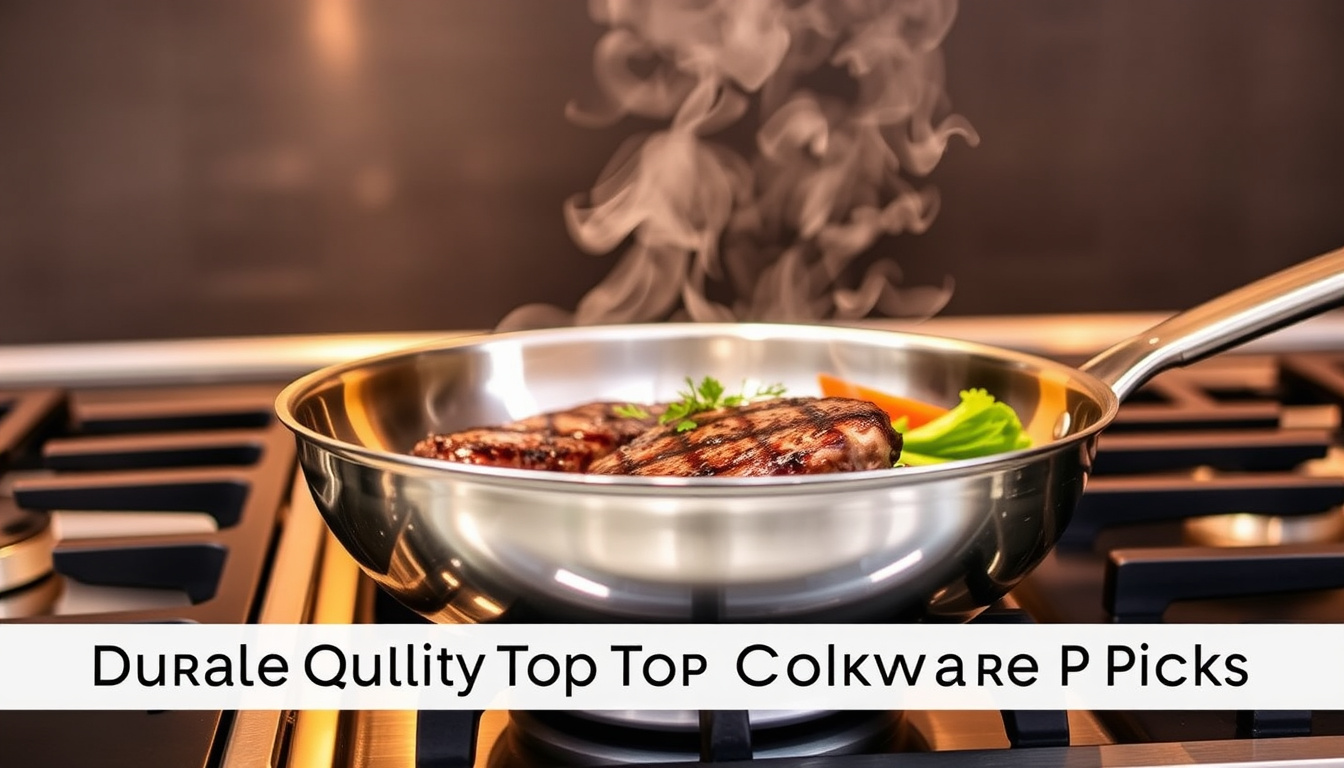

Anyone who’s spent time comparing cookware knows that stainless steel pans get a reputation for being difficult to manage — food sticks, cleaning takes effort, and the lack of a non-stick coating feels like a disadvantage. But behind that learning curve lies a material that chefs keep returning to because it lasts for decades and poses none of the health questions tied to some coating chemistries. This guide cuts through the marketing to examine how stainless steel frying pans actually perform, which ones are worth your money in 2026, and what you should and shouldn’t cook in them.
Construction: 3-ply stainless steel · Material: 18/10 stainless steel · Heat Retention: High absorption · Non-Stick Coating: None · Tested By: Experts and chefs
Quick snapshot
- Stainless steel is non-toxic (BBC Good Food)
- Requires preheating before cooking (BBC Good Food)
- MadeIn ProCoat is oven-safe to 260°C (BBC Good Food)
- Exact toxicity levels without independent lab testing
- Long-term durability data across multiple brands
- BBC Good Food published 2026 non-stick pan guide including stainless hybrids
- Independent updated 14 best non-stick frying pans for 2026
- More hybrid stainless-non-stick models entering mainstream
- PFAS-free coatings becoming standard across price tiers
The table below summarizes the key specifications that distinguish quality stainless steel frying pans from budget alternatives.
| Attribute | Detail |
|---|---|
| Primary Material | 18/10 stainless steel |
| Common Construction | 3-ply with aluminum core |
| Best For | High-heat searing |
| Not Ideal For | Acidic sauces |
| Oven Safe (top models) | Up to 260°C |
| Non-Stick Coating | None on pure stainless; hybrid options available |
| Expected Lifespan | Decades with proper care |
| Induction Compatible | Yes (magnetic stainless steel base) |
Is a stainless steel frying pan any good?
The short answer is yes — for the right cook and the right tasks. Pure stainless steel lacks the immediate release that PTFE or ceramic coatings provide, which means eggs, fish, and delicate foods require technique. But for searing steaks, deglazing pan sauces, and high-heat cooking, stainless steel performs exceptionally well. BBC Good Food’s testing team found that the best stainless steel pans heat quickly and distribute that heat evenly across the cooking surface when properly constructed.
Performance in tests
Professional reviewers consistently put stainless steel pans through rigorous tests. A video review on YouTube tested 31 stainless steel fry pans including All-Clad, Made In, and Hestan models, examining heat distribution and warp resistance over repeated heating cycles. The results showed that multi-ply construction — particularly 3-ply designs with an aluminum or copper core — dramatically outperforms single-ply stainless in both areas. Warping was most common in thinner gauge pans, while heavier constructions held their shape across hundreds of heating cycles.
Heat distribution
The 3-ply construction found in quality pans layers stainless steel on the outside with an aluminum core in between. Aluminum conducts heat roughly five times faster than stainless steel, so the aluminum layer acts as a heat highway, spreading energy evenly across the base and up the sides. Budget pans that skip this construction tend to develop hot spots, leading to uneven browning and unpredictable cooking results. Consumer Reports (independent lab testing organization) evaluates non-stick frying pans for cooking and cleanup ease, though their methodology applies equally to evaluating stainless steel construction quality.
A quality 3-ply stainless steel pan will outperform single-ply alternatives in every meaningful test — faster heating, better heat distribution, and no warping after years of use.
The implication is that buyers who spend extra on 3-ply construction get measurable returns in cooking performance and long-term durability.
Which is the healthiest frying pan to use?
This question sits at the heart of why many home cooks reconsider their cookware. The concern centers on potential chemical leaching from non-stick coatings, particularly older PTFE formulations that can release toxic compounds when overheated. Stainless steel eliminates this concern entirely because the material itself is inert — it doesn’t react with food at normal cooking temperatures, and it contains no added coatings that could break down over time.
Non-toxic comparisons
When comparing pan materials for health safety, stainless steel sits near the top of the pile alongside cast iron and carbon steel. The BBC Good Food reviewers note that the Always Pan 2.0 earned their top rating partly because its ceramic coating is explicitly non-toxic and free from PTFE and PFOA — but this is still a coating-based pan, not bare stainless. For cookers who want zero coating exposure, bare stainless steel is the clearest choice. The Independent’s testing of the Ninja Zerostick line found that modern stainless-non-stick hybrids use updated coating chemistry that sidesteps many older health concerns, though some shoppers remain cautious about any applied surface.
Stainless vs others
Cast iron holds heat exceptionally well but reacts with acidic foods and requires seasoning maintenance. Carbon steel shares stainless’s reactivity profile but demands more care. Pure stainless steel is chemically inert across the temperature ranges used in home cooking, which means tomato sauces, wine-based reductions, and citrus marinades won’t leach metals into your food the way they might from bare aluminum. Kulina.ie, which compares cookware materials for the Irish market, notes that stainless wins on reactivity — food tastes like food, not metal.
For households cooking a wide variety of foods, including acidic dishes, stainless steel’s non-reactive surface prevents flavor contamination and eliminates coating-related health questions entirely.
What this means is that health-conscious cooks gain confidence from stainless steel’s inert composition, knowing no coating will degrade over time.
What are the downsides to stainless steel pans?
Honesty matters here. Stainless steel pans come with genuine trade-offs that make them the wrong choice for some cooks and some tasks. Understanding these drawbacks before purchase prevents frustration and ensures you choose the right pan for your actual cooking habits.
Cleaning challenges
Perhaps the most common frustration is post-cooking cleanup. Foods that stick during cooking can leave residue that’s difficult to remove without soaking or abrasive tools — both of which risk damaging the surface. BBC Good Food’s review notes that the ProCook Professional pan, while featuring a high-grade stainless-steel body, has a slippery handle that some users found uncomfortable during extended cooking sessions — a small but practical drawback that affects daily use.
Food sticking
The learning curve with stainless steel centers on temperature management. Adding cold food to an inadequately heated pan virtually guarantees sticking. The technique that works: preheat the empty pan for 2-3 minutes, add a drop of water and watch it ball up and evaporate, then add your fat and food. This Leidenfrost effect tells you the pan is ready. Once mastered, sticking becomes rare even with proteins like chicken breasts. The Telegraph’s reviewers found that hybrid pans like the HexClad offer a middle ground — stainless durability with easier release — which explains their popularity among home cooks who want stainless performance without the technique demands.
Stainless steel rewards technique. Cooks who expect non-stick convenience will be disappointed. The investment in learning proper preheating and temperature management pays off in decades of reliable service — but the initial adjustment period is real.
The catch is that home cooks who invest time mastering temperature control gain a workhorse tool that outlasts multiple non-stick replacements.
What should not be cooked in stainless steel?
Stainless steel handles most cooking tasks beautifully, but five categories of food present genuine problems that even the best technique can’t fully solve.
Acidic foods list
Tomato-based sauces, wine reductions, dishes with lemon juice, and pickled vegetables can cause pitting and metallic taste transfer in stainless steel pans, particularly at prolonged cooking times. Real Simple’s cookware guide lists acidic foods as the primary category to avoid cooking in bare stainless. For these dishes, cast iron (seasoned), ceramic non-stick, or enameled cast iron serve better.
Alternatives
Eggs and delicate fish fillets present the second major challenge. Without coating, these foods require precise temperature control and either generous fat or a well-seasoned surface. For households that regularly cook morning eggs or fish, a dedicated non-stick pan (separate from stainless) makes practical sense. BBC Good Food’s review notes that the Smeg 50’s Style frying pan comes with a lid for versatility beyond frying, which is useful when braising acidic dishes rather than searing.
The same properties that make stainless steel durable and non-reactive work against it with acidic dishes. Keep a second pan (enameled cast iron or ceramic-coated) for tomato sauces, wine braises, and egg cooking — stainless steel’s other strengths make this combination worthwhile.
The pattern is that stainless steel’s durability becomes a limitation when cooking involves prolonged acidic exposure, making pan rotation essential for diverse kitchens.
Is stainless steel good for a frypan?
The honest assessment from expert testing: yes, stainless steel is excellent for a frypan — but only when matched to the right cooking tasks and expectations. The 2026 market offers more variety than ever, from pure stainless to hybrid designs that layer non-stick coatings onto stainless steel bodies.
Vs cast iron and non-stick
Stainless steel sits between cast iron and non-stick on nearly every measurable axis. It’s lighter than cast iron (easier to maneuver), holds heat better than non-stick (better searing), and doesn’t require seasoning like cast iron. Against pure non-stick, stainless wins on durability (scored by Consumer Reports testing) and oven safety. Against cast iron, stainless wins on weight and reactivity. No material does everything, but stainless covers the most ground for the widest range of everyday cooking. For a versatile pan that can handle a variety of tasks, consider stainless steel, and if you’re curious about other cooking techniques, you can learn how to make custard at $how to make custard.
Durability
The lifespan argument strongly favors stainless steel. With proper care — avoiding steel wool, using moderate heat, cleaning promptly — a quality stainless steel frypan lasts decades. Meubles.ie, an Irish retailer, stocks stainless steel frying pans from Judge, Anolon, Stellar, and Le Creuset, noting that customers who invest in quality stainless rarely need to replace their pan within a decade. Knivesandtools.ie tests and stocks frying pans with a 30-day return policy, though their experience suggests returns on stainless steel are uncommon — buyers who choose stainless tend to keep stainless.
Stainless steel costs more upfront than non-stick but costs less over time — no replacement coatings, no refurbishing. The buyer who pays £119.95 for a Smeg premium pan rather than £25 for an M&S option may spend less over ten years when accounting for non-stick replacements every 2-3 years.
The implication is that budget-conscious buyers who choose stainless steel over cheaper non-stick options reduce their long-term cookware expenditure significantly.
Eight options stand out in 2026 testing
Eight options stand out in 2026 testing across price tiers and use cases. The BBC Good Food testers gave the Always Pan 2.0 a 5/5 rating at £125 for its versatility and non-toxic ceramic coating, while the MadeIn ProCoat earned praise as a professional-quality option oven-safe to 260°C. Budget shoppers found solid value in the M&S x Tom Kerridge at £25, which impressed testers with fast, even heating despite its lower price. The GreenPan Evolution offered PFAS-free peace of mind at £70, and the Lakeland Tri-Clad delivered metal-utensil-safe performance at £34.99. For those prioritizing stainless durability with non-stick ease, the Ninja Zerostick at £59.99 and the HexClad Hybrid represent the hybrid category’s best current offerings.
Across the tested models, pricing reflects construction quality and coating technology, not simply brand name.
| Pan Model | Price | Key Strength | Oven Safe | Source |
|---|---|---|---|---|
| Always Pan 2.0 | £125 | Best all-in-one, 5/5 rating | Standard | BBC Good Food |
| MadeIn ProCoat | £109 | Professional quality | 260°C | BBC Good Food |
| GreenPan Evolution | £70 | PFAS-free, sustainable | 200°C | BBC Good Food |
| Lakeland Tri-Clad 28cm | £34.99 | Best value hybrid | 230°C | BBC Good Food |
| Ninja Zerostick 30cm | £59.99 | Best overall 2026 | Standard | The Independent |
| Dexam Supreme 26cm | £49.45 | Best stainless option | Standard | The Independent |
| M&S x Tom Kerridge | £25 | Budget performance | Standard | BBC Good Food |
| HexClad Hybrid 25cm | Market rate | Hybrid durability | Standard | The Telegraph |
Buyers who invest in quality stainless steel rarely need to replace their pan within a decade, according to Irish retailers.
For Irish cooks, the 2026 market offers tested options from major UK retailers available through sites like Meubles.ie and Knivesandtools.ie. The shared market means UK reviews apply directly, though post-Brexit pricing adjustments and stock availability vary by retailer.
Five core specifications determine how a stainless steel frypan performs in practice
Understanding these specifications helps buyers distinguish marketing claims from actual performance differences.
| Specification | What It Means | Why It Matters |
|---|---|---|
| Primary Material | 18/10 stainless steel = 18% chromium, 10% nickel | Corrosion resistance, shine, food safety |
| Construction | 3-ply or 5-ply layers | Heat distribution, warp resistance |
| Induction Base | Magnetic stainless steel layer | Works on induction hobs |
| Handle Rating | 200°C to 260°C range | Oven safety for finishing |
| Weight (28cm) | 1.2–1.5kg typical | Maneuverability and capacity |
Buyers who check these specifications before purchase avoid disappointment with incompatible or poorly constructed pans.
Upsides
- Non-toxic — no coating chemicals
- Decades of service life with proper care
- High-heat searing and deglazing
- Non-reactive with acidic foods (with care)
- Oven-safe to high temperatures
- Induction compatible
Downsides
- Food sticks without proper technique
- Learning curve for new cooks
- Heavier than non-stick alternatives
- Not ideal for acidic sauces
- Cleaning can require soaking
- Higher initial cost than basic non-stick
“‘Want the best all-round frying pan we tested? Go for the Always Pan 2.0, it’s the most versatile pan in the guide.’”
“‘The All-Clad HA1 Hard Anodized Nonstick Fry Pan leads the pack for 2026 as the top all-around nonstick pan.’”
Stainless steel frying pans offer reliable searing power, and top stainless steel pan sets extend that performance across versatile sets for home and pro kitchens alike.
Frequently asked questions
What size stainless steel frying pan do I need?
For most households, a 26-28cm pan covers daily cooking. The 26cm handles two eggs or a couple of chicken breasts, while 28cm accommodates larger steaks or family-sized portions. Smaller 20-24cm pans work as backup or egg-specific pans. Larger 30cm+ pans suit serious entertainers or outdoor cooking setups.
Are stainless steel frying pans induction compatible?
Yes, provided the pan has a magnetic base. Most quality stainless steel frypans include an induction-compatible base. The Ninja Zerostick, for example, uses stainless steel with an aluminum core and works on all hob types including induction. Check the product listing before purchase if you have an induction cooker.
How do I prevent food from sticking?
The technique is simple: preheat the empty pan for 2-3 minutes, add a drop of water to test readiness (it should ball up and evaporate), add your cooking fat, let it heat briefly, then add your food. Don’t move food for 60-90 seconds — the Maillard reaction creates a natural release. Using sufficient fat also helps significantly.
Can I use metal utensils on stainless steel?
Yes — metal utensils won’t damage stainless steel the way they destroy non-stick coatings. However, metal utensils won’t improve food release and may scratch any hybrid non-stick coating. For pure stainless steel, silicone, wood, or metal all work fine. For hybrid pans with non-stick coatings, check the manufacturer’s guidance.
What is the best brand for stainless steel frying pans?
Based on 2026 testing, All-Clad (American), MadeIn (French), and Demeyere (Belgian) consistently rank highest for professional-quality stainless steel. For mid-range value, ProCook, Lakeland, and Ninja offer strong performance. Budget options from M&S and George at Asda provide surprisingly good results for casual cooking.
How to clean burnt stainless steel frying pan?
For burnt residue, fill the pan with water and bring to a simmer. Add 2 tablespoons of baking soda and let it bubble for 5 minutes. Use a wooden spatula to loosen residue. For stubborn spots, make a paste of baking soda and water, apply to the stain, and scrub gently with a non-abrasive pad. Avoid steel wool, which scratches the surface.
Are stainless steel pans dishwasher safe?
Technically yes, but hand washing extends their lifespan and appearance. Dishwasher detergent can cause pitting on polished stainless over time. Hand washing with mild detergent and a soft sponge preserves the pan’s finish. If you must use a dishwasher, avoid highly alkaline detergent pods and dry promptly.
For Irish cooks, the 2026 market offers tested options from major UK retailers available through sites like Meubles.ie and Knivesandtools.ie. The shared market means UK reviews apply directly, though post-Brexit pricing adjustments and stock availability vary by retailer.
For buyers in Ireland, the decision between pure stainless and hybrid models depends on cooking habits. Cooks who primarily sear meats, deglaze sauces, and cook family meals will find pure stainless steel’s durability and heat retention worth the technique adjustment. Cooks who regularly prepare eggs, fish, and acidic dishes may prefer keeping a hybrid or dedicated non-stick pan alongside their stainless for tasks where the material excels. The investment in a quality stainless steel frypan — even at £119.95 for the Smeg premium — pays dividends over years of daily use without the recurring cost of coating replacement.

Rachel Walsh leads fact-checking, source verification and corrections at Aussie Pulse.