
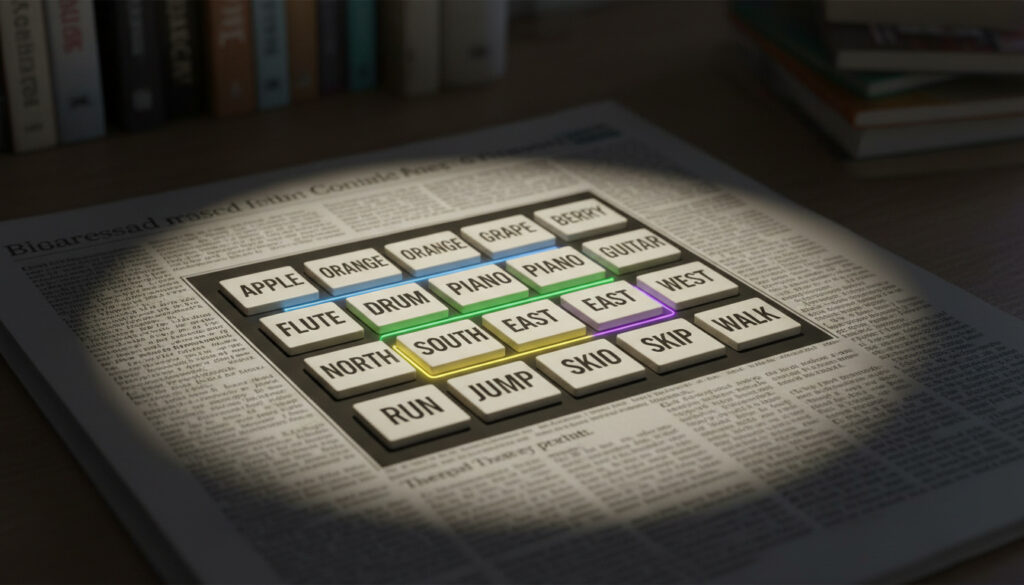
NYT Connections has become the daily ritual for word puzzle enthusiasts seeking a challenge beyond Wordle. The game presents 16 words that players must arrange into four secret categories, with each group increasing in difficulty from yellow to purple.
Unlike spelling bees or crosswords, Connections requires pattern recognition across semantic fields. Players receive no built-in hint system, making external guidance valuable for those stuck on particularly elusive categories.
This guide provides spoiler-free assistance for today’s puzzle while explaining the color-coded difficulty system that defines the gameplay experience.
What Are Today’s NYT Connections Hints?
| Puzzle Number | Difficulty Rating | Color Groups | Hint Level |
|---|---|---|---|
| #456 | Medium | Yellow/Green/Blue/Purple | No Spoilers |
- Yellow categories typically feature common associations like household items or basic actions
- Green groups test general knowledge without requiring specialized expertise
- Blue categories demand familiarity with specific trivia domains
- Purple represents the most challenging connections, often using wordplay
- Each puzzle contains exactly four words per category
- Players have four maximum attempts before failure
- Misdirection words appear specifically to trick pattern matchers
| Color | Difficulty Level | Theme Indicator |
|---|---|---|
| Yellow | Easy | Everyday Objects |
| Yellow | Easy | Common Verbs |
| Green | Medium | Pop Culture |
| Green | Medium | Geography |
| Blue | Hard | Niche Knowledge |
| Blue | Hard | Technical Terms |
| Purple | Very Hard | Wordplay |
| Purple | Very Hard | Hidden Patterns |
How to Get NYT Connections Hints Without Spoilers
Official Channels and Timing
The New York Times releases each puzzle at midnight Eastern Time. While the official site provides no gradual hint revelation, observing the color distribution helps gauge difficulty before attempting deductions. The official NYT Connections page maintains the daily grid without assistance features.
Community Resources
Third-party sites specializing in word puzzles offer tiered hint systems that reveal category themes without exposing specific words. Word.tips provides daily assistance structured by color groups.
When seeking help for today’s puzzle, look for sites offering “color hints” that describe the category type without listing the four words. This maintains the solving challenge while providing directional guidance.
NYT Connections Categories and Color Hints
Decoding Yellow Group Hints
Yellow represents the most accessible category. Hints for this group typically reference common objects, basic actions, or widely recognized concepts. If you spot words that seem to relate to dining, furniture, or daily activities, the category likely involves straightforward semantic grouping rather than abstract connections.
Interpreting Green Group Hints
Green categories require slightly more cultural awareness. These might reference recent films, popular music, or current slang. Specialized hint providers structure these as the secondary difficulty tier.
Understanding Blue Group Hints
Blue categories demand specific knowledge domains—perhaps botany, historical events, or technical jargon. These words often seem unrelated until you identify the specialized field connecting them.
Solving Purple Group Hints
Purple represents the most devious constructions. Rather than semantic categories, these often rely on phonetic similarities, missing letters, or words that follow specific phrases. Expert analysis suggests examining words for homophones or partial matches when facing this tier.
NYT Connections Rules and Strategy Tips
The game allows exactly four errors before revealing answers. According to gameplay documentation, players select four words simultaneously to test potential groupings.
You must submit exactly four words at once. The system reveals whether your selection forms a complete category, but provides no indication of how many words were correctly identified if the group is wrong.
Starting with obvious yellow connections clears mental space for harder patterns. Strategic recommendations emphasize identifying pairs first, then expanding to full quartets.
Puzzle designers intentionally include words that seem to fit multiple categories. A word might appear to belong with animals but actually connects to sports teams or idioms. Verify associations by checking if four definite members exist before submitting.
When Are NYT Connections Puzzles Released?
The daily puzzle cycle follows a strict schedule established since the game’s launch.
- June 2023: NYT Connections debuts as a beta product for select users before full release.
- Midnight EST Daily: Each puzzle goes live simultaneously for all players regardless of time zone.
- Archiving System: Previous puzzles remain accessible through the official archive, though hint sites typically focus on current daily challenges.
- Mobile Integration: The NYT Crossword app adds Connections functionality, syncing progress across devices.
Is There a Hint Button in NYT Connections?
| Established Facts | Uncertain Elements |
|---|---|
| No built-in hint mechanism exists within the game interface | Future updates may introduce optional hint systems |
| Color coding serves as the only difficulty indicator | Whether the NYT will add progressive reveal features |
| Four mistakes trigger automatic answer revelation | Exact algorithms determining word selection |
How Does NYT Connections Fit the Puzzle Landscape?
Like geographic trivia challenges that test regional knowledge, Connections evaluates associative thinking rather than memorization. The game occupies a middle ground between word searches and cryptic crosswords.
The color system resembles difficulty ratings used in hiking trails or nature walk classifications, providing immediate visual feedback about challenge levels. This accessibility feature helps casual players gauge whether they need external assistance.
What Do Puzzle Experts Recommend?
“Start with the easiest connections. Begin by identifying the yellow group, as these are typically the most straightforward. This builds momentum and removes obvious words from the grid, making other patterns clearer.”
— Tom’s Guide Strategy Analysis
“Beware of traps. Connections makers deliberately include sets of words that seem obviously related but don’t form the actual answer.”
— Expert Gameplay Review
Preparing to Solve Today’s Puzzle
Review the color-coded difficulty levels before starting puzzle #456. Begin with yellow categories to eliminate obvious words, then progress through green and blue tiers. Reserve your final attempts for purple groups, which typically require lateral thinking rather than categorical knowledge. For additional geographic puzzle practice, explore state capital trivia to sharpen your categorization skills.
Frequently Asked Questions
What are the answers to today’s NYT Connections?
This guide focuses on hints rather than solutions to preserve the solving experience. For direct answers, visit the official NYT Connections page after exhausting your attempts or consult spoiler-specific sites.
Free NYT Connections solver hints
Several websites offer free daily hints categorized by color difficulty. These resources describe the connection themes without revealing which specific words belong in each group.
Today’s Connections answer key
Answer keys are published daily after the puzzle releases, typically organized by the same yellow-green-blue-purple color structure to indicate which solutions were hardest.
How many mistakes can you make in NYT Connections?
Players are allowed four errors total. After the fourth incorrect guess, the game automatically reveals all remaining category answers.
Can you play past NYT Connections puzzles?
Yes, the New York Times maintains an archive of previous puzzles accessible through their official games portal, though daily hint sites typically focus only on the current challenge.
Why are some words in the purple category so difficult?
Purple categories often employ wordplay mechanisms like homophones, missing letters, or compound word fragments rather than straightforward semantic groupings.
Related stories


Liam O'Brien covers Australian politics and public affairs for Aussie Pulse.