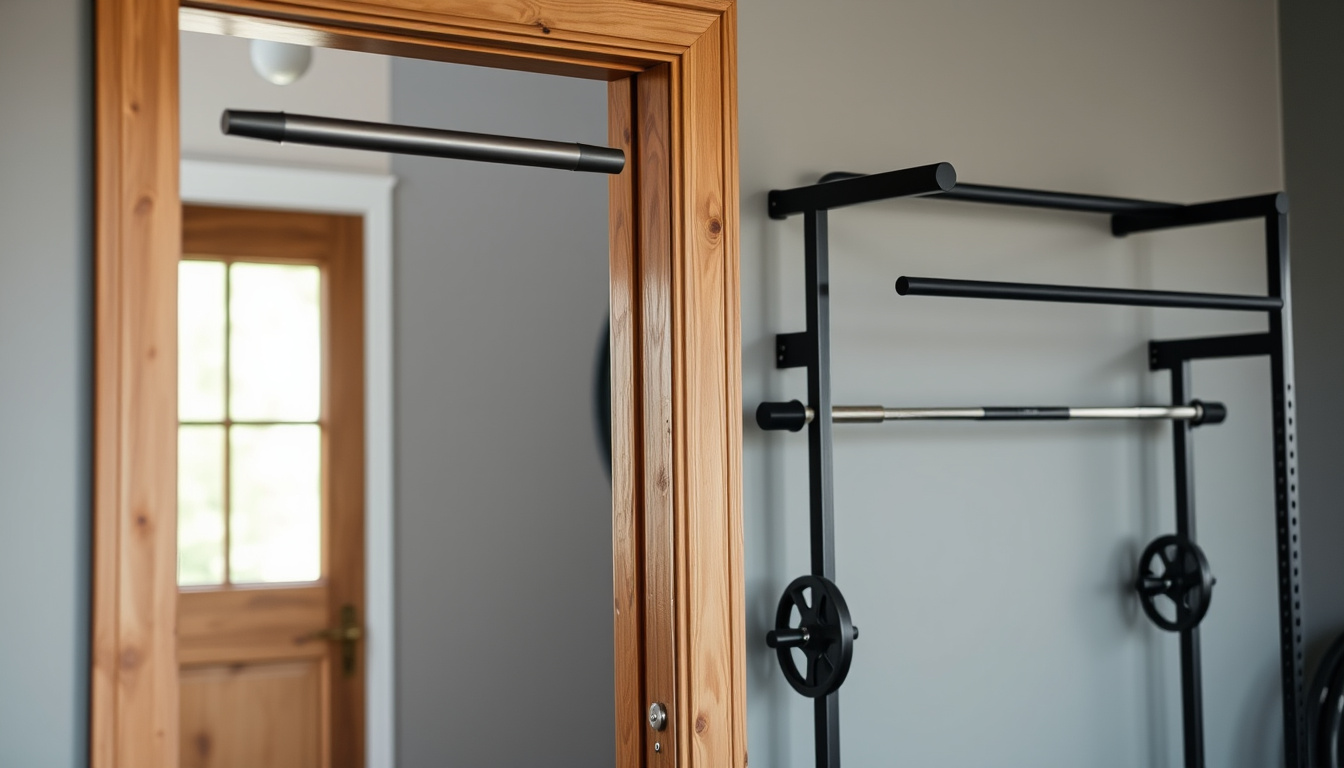
Chin up bars have become essential equipment for home fitness enthusiasts, particularly those living in apartments or rental properties where permanent installations are impractical. These compact training tools enable effective upper body workouts without requiring dedicated gym space or expensive memberships. Understanding the differences between available types, their weight capacities, and proper installation methods helps consumers make informed purchasing decisions that align with their fitness goals and living situations.
The market offers several distinct categories of chin up bars, each designed for specific environments and user needs. From doorway-mounted pressure bars to wall-mounted permanent fixtures and freestanding stations, each type presents unique advantages and limitations that affect both performance and practicality. This guide examines the most highly reviewed models of 2025-2026, providing detailed comparisons of safety features, installation requirements, and exercise versatility across different product categories.
Whether seeking a budget-friendly option for occasional use or a premium system for serious training, consumers can find suitable equipment by evaluating their specific circumstances, including door frame dimensions, ceiling height, rental agreements, and long-term fitness objectives. The following analysis synthesizes testing data and expert recommendations to deliver a comprehensive resource for selecting the ideal chin up bar for any home setup.
What Is the Best Chin Up Bar?
Determining the best chin up bar depends significantly on individual circumstances, particularly living situation, available space, and training intensity goals. Testing across multiple product categories reveals distinct winners for different use cases, with certain models excelling in specific environments while potentially underperforming in others. The following overview grid synthesizes key specifications and performance characteristics to assist buyers in identifying the most suitable option for their particular needs.
| Type | Key Pros | Key Cons | Price Range |
|---|---|---|---|
| Doorway | No screws needed, portable, easy installation | May damage frames, limited to door dimensions | $20-$100 |
| Wall-Mounted | Superior stability, high weight capacity | Permanent installation required | $100-$300 |
| Freestanding | No installation, multiple grip options | Takes floor space, bulkier | $80-$200 |
| Portable | Versatile positioning, travel-friendly | Less stable, limited exercise variety | $30-$150 |
Based on comprehensive testing data, several models stand out as top performers in their respective categories. The Rogue Jammer emerges as the premium choice for those seeking stud-mounted stability without permanent wall damage, constructed from 11-gauge steel with customizable finishes and HSA/FSA eligibility. For renters prioritizing no-screw installation, the DMoose Fitness doorway leverage bar perfects the pressure-mount design with versatile grip positions, earning recognition as the top pick among pressure-based options. The GoFit Elevated Chinup Station captures the freestanding category best overall designation, offering multi-grip functionality within a portable frame that accommodates users weighing up to 600 pounds.
Key insights from testing and user feedback reveal several critical factors for prospective buyers to consider. Doorway bars fitting widths between 26.5 and 41.5 inches with depths of 2 to 8 inches serve the majority of residential door frames, though trim configurations may require additional measurement before purchase. Multi-grip bars from manufacturers like ProsourceFit and Stamina enable diverse exercise targeting back, biceps, and shoulder musculature compared to standard single-bar designs. Budget-conscious consumers find reliable options under $50 from brands like Sagler and Sportneer, while those willing to invest $50-$100 access enhanced padding, better grip materials, and superior weight capacities. Premium setups exceeding $150 deliver institutional-grade stability suitable for heavy training loads and dynamic movements.
| Feature | Doorway | Wall-Mount | Freestanding |
|---|---|---|---|
| Weight Capacity | 250-400 lbs | 400-800 lbs | 300-600 lbs |
| Installation Time | Under 5 minutes | 30-60 minutes | 15-30 minutes assembly |
| Space Required | Minimal (doorway) | Wall space only | Floor footprint needed |
| Best For | Renters, temporary setups | Permanent home gyms | Multiple grip variety |
Are Doorway Chin Up Bars Safe?
Safety concerns represent the most frequent hesitation for prospective chin up bar purchasers, particularly regarding doorway-mounted models that rely on pressure or leverage rather than permanent fasteners. Comprehensive testing and real-world user experiences indicate that properly selected and installed doorway bars present minimal risk when users observe weight limits and installation guidelines. However, certain conditions elevate danger levels, and understanding these factors enables safer implementation in home environments.
Doorway chin up bars operate by distributing user weight through pressure against the door frame’s interior surfaces, creating friction-based stability that can shift under certain conditions. Bars lacking adequate padding or grip mechanisms may slide during use, particularly during dynamic movements involving swinging or kipping. The SQUATZ Adjustable model addresses this concern with dedicated safety locks preventing both sliding and rotation, representing a design evolution that enhances user confidence. Slip-over bars without leverage components carry inherently higher risk profiles and merit avoidance regardless of price considerations.
Can a Chin Up Bar Damage My Door Frame?
Door frame damage represents a legitimate concern for renters and homeowners alike, manifesting in several predictable patterns that informed buyers can mitigate through careful product selection and protective measures. Paint stripping occurs when pressure bars compress against painted door frame surfaces, particularly during repeated installation and removal cycles. Manufacturers including HAKENO incorporate 2-inch padded contact surfaces to distribute pressure more evenly and reduce paint damage risk.
Crushing damage affects door casings with thin molding profiles, especially on older frames with particle board cores or deteriorating structural integrity. The Anxen doorway bar addresses this concern through removable rubber pads that protect trim surfaces while maintaining stable mounting. Users with decorative door frames should prioritize padded models from Sagler or Sportneer that minimize compression damage, or consider freestanding alternatives that eliminate frame contact entirely.
Place microfiber cloths or cardboard squares between pressure bars and painted surfaces during installation. This simple buffer absorbs moisture, reduces friction marks, and prevents paint transfer during repeated uses.
Document your door frame condition with photographs before installing any doorway bar. Should damage occur during normal use, documented pre-installation images protect your security deposit and provide evidence that pre-existing issues were not caused by the equipment.
What Safety Features Should I Prioritize?
Evaluating chin up bar safety requires attention to multiple interconnected features that collectively determine real-world protection during training sessions. Grip texture and material quality directly influence hand security during hanging movements, with foam grips from budget models wearing faster than neoprene or textured metal surfaces found on premium options. Padding thickness affects both comfort and pressure distribution, with inadequate cushioning causing painful pressure points during extended workout sessions.
Locking mechanisms vary widely across manufacturers and price points, ranging from basic friction pins to sophisticated multi-point securing systems. The Rogue Jammer’s stud-mount design eliminates slip risk entirely by anchoring directly to structural components, representing the safest option for serious training applications. Weight capacity ratings should accommodate not just body weight but also additional resistance from weighted vests, dip belts, or towel exercises that increase effective load significantly.
How Do You Install a Chin Up Bar?
Installing a chin up bar requires varying levels of technical proficiency depending on the chosen mounting method, with no-screw doorway options demanding minimal tools and wall-mounted systems requiring carpentry knowledge. Understanding the installation process for each type enables accurate time budgeting and ensures users possess necessary materials before beginning setup. Most doorway bars arrive ready for immediate installation without additional purchases, while wall-mounted systems typically include mounting hardware but may require supplementary fasteners for specific wall types.
No-Screw Doorway Installation Steps
Doorway pressure bars follow a consistent installation sequence regardless of manufacturer, though specific adjustment sequences vary slightly between models. Begin by measuring your doorway dimensions to confirm compatibility with the bar’s adjustment range, ensuring width falls between 26.5 and 41.5 inches and depth accommodates the bar’s mounting configuration. Most models reach ready status within five minutes, representing a significant advantage over permanent installations.
Position the mounting brackets at equal distances from the door frame edges, then adjust the central bar to achieve appropriate tension against both interior surfaces. The Sportneer doorway bar and similar models employ telescoping sections that expand until pressure creates stable engagement. Test stability by grasping the bar and applying weight gradually before attempting full movements, verifying that no slipping or shifting occurs during simulated exercise loads.
Wall and Stud Mounting Procedure
Wall-mounted chin up bars require locating structural wall studs using a stud finder, marking their positions, and ensuring proper spacing for the specific mounting plate configuration. The Rogue Jammer mounts above door frames into wood studs using heavy-duty fasteners, with 11-gauge steel construction providing exceptional rigidity that pressure-mount systems cannot match. Installation typically requires two people for positioning and aligning mounting hardware while securing screws sequentially to prevent misalignment.
Never mount chin up bars into drywall alone without locating studs or using appropriate hollow-wall anchors rated for dynamic loads. Standard drywall anchors support static weights only and can fail catastrophically during exercise movements, causing injury and property damage.
Freestanding Assembly Guidelines
Freestanding chin up stations arrive partially assembled with detailed instructions for completing setup, typically requiring 15-30 minutes for full assembly depending on complexity. The GoFit Elevated Chinup Station and similar designs position elevated handles above a stable base frame, allowing users to step up into pull-up positions without door frame constraints. Base units often include balance weights, sand bags, or dedicated floor plates that prevent tipping during use.
What Is the Weight Limit for a Chin Up Bar?
Weight capacity specifications vary significantly across chin up bar types and manufacturers, with basic doorway models supporting 250-400 pounds while premium wall-mounted systems accommodate 400-800 pounds or more. Understanding these limits helps users select appropriate equipment for their body weight plus additional resistance equipment, preventing equipment failure that could cause serious injury. Published weight limits typically include safety margins above nominal ratings, though aggressive dynamic movements can stress equipment beyond static load assumptions.
Doorway pressure bars generally offer lower weight capacities than wall-mounted alternatives due to their reliance on friction-based stability rather than direct structural attachment. Budget models from Sagler and similar manufacturers specify ratings around 250-300 pounds, adequate for most users without additional weighted equipment. Mid-range options like HAKENO and DMoose Fitness increase limits to 400 pounds or higher, accommodating heavier athletes and those incorporating weighted vests into training protocols. Freestanding stations like the GoFit Elevated typically specify 300-600 pound capacities, providing flexibility for users across the weight spectrum.
What Types of Chin Up Bars Are There?
The chin up bar market encompasses four primary categories, each designed for specific environments and user requirements that determine installation methods, stability levels, and exercise versatility. Doorway-mounted bars represent the most popular segment for apartment dwellers and renters, utilizing pressure or leverage against door frames without requiring permanent modifications. These models install and remove within minutes, enabling temporary setups that leave no trace after removal.
Wall-mounted systems anchor directly to structural wall components, typically using studs or dedicated mounting plates that distribute weight across substantial bearing surfaces. The Rogue Jammer exemplifies this category, offering institutional-grade stability through stud attachment rather than pressure mechanisms. These permanent installations suit dedicated home gym spaces where equipment remains in place indefinitely.
Freestanding stations provide maximum flexibility through self-supporting frames that require no wall or door frame attachment, making them ideal for rooms with unconventional architecture or rental properties forbidding any modifications. The ProsourceFit Multi-Grip represents this category with multiple handle positions enabling diverse grip widths and angles. However, these units consume floor space and often prove bulkier than wall-mounted alternatives.
Joist-mounted options serve users with specific architectural features like exposed beams or hallway supports that accommodate alternative mounting strategies. The Ironsurge hallway bar leverages elevated mounting points for surprising stability without standard door frames, representing an innovative solution for non-traditional spaces.
What Is the Difference Between a Chin Up Bar and Pull Up Bar?
The distinction between chin up bars and pull up bars relates primarily to grip positioning and resulting muscle engagement rather than equipment design. Traditional pull up bars accommodate overhand (pronated) grips with hands positioned wider than shoulder width, emphasizing latissimus dorsi activation while engaging biceps as secondary contributors. Chin up configurations utilize underhand (supinated) grips with hands positioned at or narrower than shoulder width, placing greater emphasis on biceps recruitment during the pulling movement.
Equipment marketed as chin up bars versus pull up bars typically differs only in marketing positioning, as most bars accommodate both grip orientations equally. True functional differentiation occurs in multi-grip bars featuring angled or offset handles that naturally position hands in specific orientations. The Stamina Doorway Trainer with rock climbing holds exemplifies specialized equipment designed for particular grip configurations, enabling varied training approaches within a single installation.
Underhand (chin up) grips emphasize bicep development and suit those building arm strength, while overhand (pull up) grips prioritize back width and require greater upper body maturity for proper execution. Alternating between grip orientations provides balanced development when training goals permit.
What Exercises Can You Do on a Chin Up Bar?
Chin up bars enable diverse exercise programming beyond basic pulling movements, with grip variation and body positioning creating numerous training stimuli from a single piece of equipment. Standard pull ups and chin ups form the foundation of bar training, with each variation targeting slightly different muscle groups based on grip orientation and hand spacing. Beyond these fundamental movements, creative positioning and controlled tempo variations expand the exercise catalog significantly.
Basic Movement Patterns
Standard pull ups engage the latissimus dorsi, rhomboids, and rear deltoids when performed with overhand grip and shoulder-width or wider hand placement. The ProsourceFit multi-grip bar facilitates this movement with multiple handle positions that enable consistent lat engagement across different grip widths. Chin up variations with underhand grip increase bicep involvement, making them particularly valuable for athletes prioritizing arm development alongside back thickness.
Leg raises and knee raises target abdominal musculature when performed with straight arms and controlled lowering phases, with increasing difficulty achieved through straight leg positioning and slower eccentric tempo. Hanging knee raises generally suit beginners, while straight leg raises require sufficient grip strength and core stability for safe execution. Rock climbing holds on specialized bars like the Stamina Doorway Trainer add variety through irregular grip positions that challenge stability and coordination.
Advanced Variations and Progressions
Wide-grip pull ups intensify latissimus dorsi activation by reducing bicep involvement and increasing moment arm at the shoulder, creating greater challenge for the target musculature. Narrow-grip chin ups inversely minimize lat involvement while maximizing bicep stretch and contraction throughout the movement. Neutral grip positions, available on multi-grip bars like the Perfect Fitness Multi-Gym, offer compromise positioning that balances muscle recruitment across multiple contributors.
Archer pull ups and commando pull ups introduce unilateral loading patterns that develop unilateral strength and address muscle imbalances between sides. These advanced variations require substantial base strength before safe implementation, typically reserved for athletes with demonstrated proficiency in standard movement patterns. L-sit positions and related static holds build core stability and endurance when performed for time under tension rather than repetition count.
Timeline: Evolution of Home Chin Up Bars
The chin up bar market has undergone substantial transformation over the past two decades, driven by changing consumer lifestyles, technological improvements in materials and manufacturing, and evolving fitness industry standards. Understanding this progression helps contextualize current product offerings and anticipate future development directions that may affect purchasing decisions.
- Early 2000s: Basic doorway bars enter mass market through big-box retailers, offering affordable entry points but limited durability and safety features.
- 2008-2012: Home fitness boom following economic downturn increases demand for compact equipment, prompting manufacturers to improve padding and grip materials.
- 2015-2018: Multi-grip designs gain popularity, with manufacturers like Perfect Fitness introducing angled handles that enable varied training without equipment changes.
- 2019-2021: Social media fitness culture drives demand for aesthetically pleasing equipment, with color customization and premium finishes becoming differentiators.
- 2022-2024: Safety-focused designs emerge with locking mechanisms and improved mounting systems, responding to injury reports and consumer safety concerns.
- 2025-2026: Integration of HSA/FSA eligibility and smart tracking features begins appearing in premium models, with Rogue Jammer leading this accessibility trend.
What Is Known Versus Unknown About Chin Up Bars
Consumer research reveals confident knowledge in several chin up bar categories while highlighting persistent uncertainties that buyers should acknowledge when making purchasing decisions. Established facts derive from testing methodologies, manufacturer specifications, and aggregated user feedback, while unknown areas represent variables affected by individual circumstances or insufficient documentation from sources.
| Established Information | Remaining Uncertainties |
|---|---|
| Doorway bars fit most residential door frames (26.5″-41.5″ width, 2″-8″ depth) | Long-term door frame structural impact after years of repeated use |
| Multi-grip bars enable more exercise variety than standard bars | Optimal grip spacing for specific muscle group targeting |
| Pressure-mount bars install in under five minutes | Precise weight limits for specific movements (kipping vs strict) |
| Wall-mounted systems provide superior stability for heavy users | Real-world failure rates across different product generations |
| Quality models cost $50-200 depending on features | Actual resale value after extended use periods |
Choosing the Right Chin Up Bar for Your Situation
Selecting the appropriate chin up bar requires honest assessment of personal circumstances, fitness goals, and practical constraints that affect both immediate usability and long-term satisfaction. Rental property occupants should prioritize no-screw doorway options like Sportneer or Sagler that minimize damage risk and enable quick removal. Homeowners with dedicated workout spaces may benefit from wall-mounted systems offering maximum stability for intensive training protocols.
Those prioritizing exercise variety should consider multi-grip options from ProsourceFit or GoFit that enable training different grip orientations without equipment changes. Budget constraints push toward affordable options under $50 that deliver adequate functionality for occasional use, though investing in the $50-100 range typically yields substantially improved padding, grip materials, and weight capacity.
Apartment dwellers with limited storage space benefit from doorway bars that remain installed during workouts but store unobtrusively when not in use, with models like HAKENO specifically designed to allow door closing with bar in place. Those uncertain about long-term commitment should explore freestanding options that require no permanent modifications and relocate easily if circumstances change.
Product Recommendations and Expert Sources
Independent testing organizations and fitness publications provide valuable purchasing guidance through systematic evaluation of chin up bar performance characteristics. TechGearLab conducts detailed comparisons examining stability, comfort, and value across multiple price categories, with their 2025-2026 testing cycle identifying top performers in each classification. Garage Gym Reviews focuses on home gym applications, providing practical insights from users incorporating bars into comprehensive training setups.
Major fitness publications including Men’s Journal and Men’s Fitness offer consumer-oriented assessments balancing performance expectations against practical considerations for typical users. YouTube testing channels including established fitness reviewers provide visual demonstrations of installation processes, stability testing, and exercise execution that supplement written reviews with dynamic content.
Manufacturer documentation, while promotional in nature, provides essential specifications for weight capacities, dimension compatibility, and warranty coverage that inform final purchasing decisions. Direct communication with manufacturer support teams clarifies ambiguous specifications and confirms product suitability for specific applications before commitment.
Summary
Chin up bars represent accessible, versatile home fitness equipment that enables effective upper body training without requiring significant space or permanent installations. Doorway pressure-mount options serve renters and temporary setups with installation times under five minutes and damage-minimizing padded designs from manufacturers like Sagler and Sportneer. Wall-mounted systems like the Rogue Jammer provide superior stability for serious training applications, though they require structural attachment that precludes rental property use.
Weight capacities ranging from 250 to 800 pounds accommodate users across the fitness spectrum, with multi-grip designs enabling exercise variety that justifies equipment investment. Careful measurement of door frame dimensions before purchase prevents compatibility issues, while prioritizing safety features like locking mechanisms and adequate padding reduces injury risk during training. For those seeking comprehensive fitness nutrition guidance alongside equipment selection, consulting additional resources supports holistic health improvement. Understanding personal constraints and training objectives enables informed decisions that balance immediate usability with long-term fitness progression, ultimately selecting the chin up bar that best serves individual circumstances and goals.
Frequently Asked Questions
How do I know if my door frame can support a chin up bar?
Measure your door frame width and depth before purchasing. Most doorway bars accommodate widths between 26.5 and 41.5 inches with depths of 2 to 8 inches. Check that your frame has flat interior surfaces without decorative molding that could interfere with mounting brackets.
Can I use a chin up bar if I weigh over 300 pounds?
Yes, but select models with appropriate weight ratings. Freestanding stations like GoFit Elevated support 300-600 pounds, while premium wall-mounted systems accommodate 400-800+ pounds. Avoid budget models with ratings below your body weight plus any additional equipment.
Will a doorway chin up bar damage my apartment walls?
Properly selected and installed bars with adequate padding minimize damage risk. Models like Anxen include removable rubber pads that protect trim surfaces. Using protective cloths between mounting brackets and painted surfaces further reduces damage probability.
What is the difference between a multi-grip and standard chin up bar?
Multi-grip bars feature angled or offset handles enabling wide, narrow, and neutral grip positions from a single installation. Standard bars offer a single horizontal grip position. Multi-grip options like those from ProsourceFit enable varied muscle targeting without equipment changes.
How long do chin up bars typically last?
Quality chin up bars from reputable manufacturers typically last several years with normal use. Factors affecting longevity include build quality, frequency of use, body weight, and whether dynamic movements are performed. Premium models with steel construction outlast budget options with foam grips and plastic components.
Can I close my door with a chin up bar installed?
Some doorway bars specifically allow door closure while installed. Models like HAKENO and Anxen are designed to accommodate door movement when bar remains in place. Not all bars offer this capability, so verify this feature if door closure during storage is important.
Do I need to install wall studs for a chin up bar?
Only wall-mounted systems require stud installation. No-screw doorway bars use pressure or leverage against door frames without requiring any fasteners. Freestanding stations require no wall attachment whatsoever. Stud mounting provides maximum stability but is unnecessary for basic doorway use.
Related stories


Liam O'Brien covers Australian politics and public affairs for Aussie Pulse.