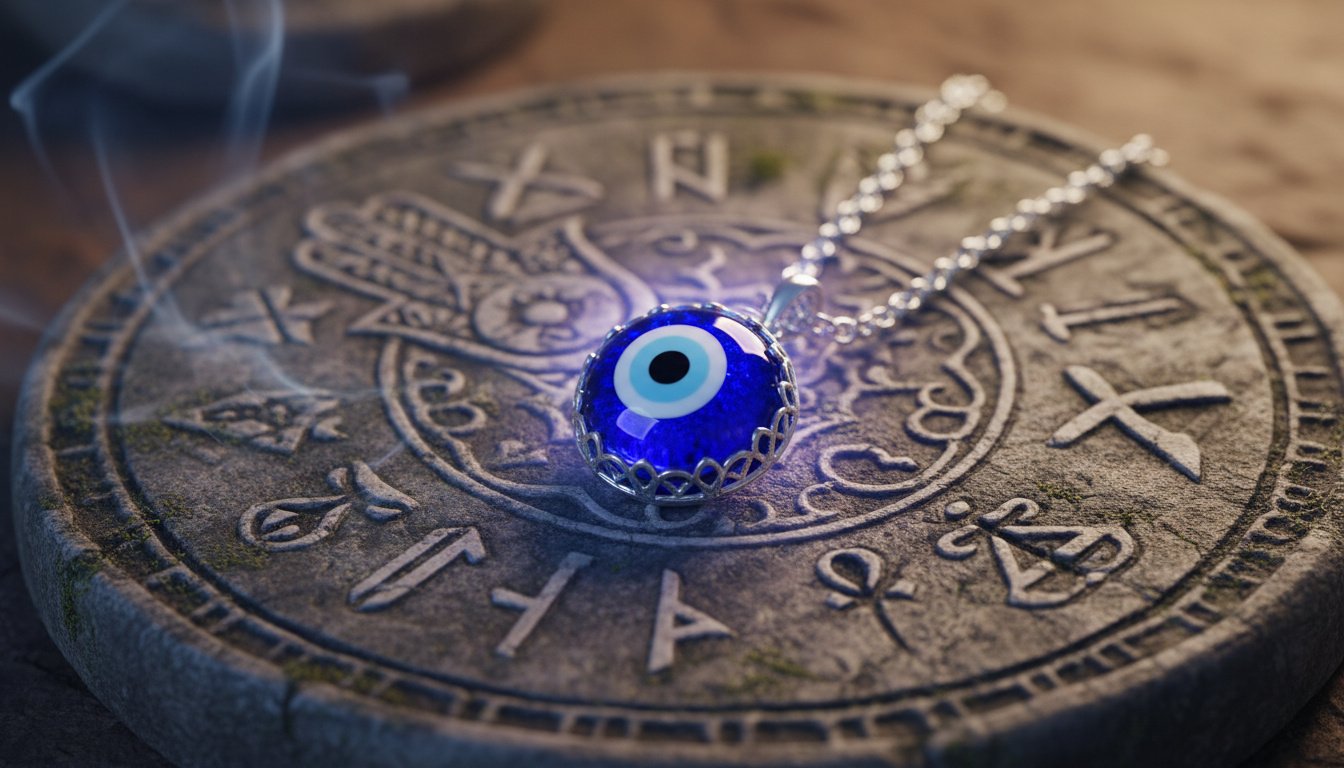

The evil eye necklace serves as both an ancient spiritual shield and a contemporary fashionable accessory. This protective amulet, tracing its origins to ancient Mesopotamia over 5,000 years ago, functions as a cosmic mirror believed to reflect harmful intent and envious gazes back to their source. Beyond its metaphysical significance, the symbol has transcended its Mediterranean and Middle Eastern roots to become a global jewelry staple, adorning wearers who seek either spiritual protection, emotional balance, or simply a meaningful aesthetic.
At its core, the necklace represents an energetic barrier against negativity. The iconography—typically stylized as a cobalt blue eye—appears across cultures from Turkey to Greece, embedded in traditions that predate written history. While some wearers maintain literal belief in its supernatural protective properties, others embrace the symbol as a mindful reminder to guard against toxic influences and maintain personal boundaries.
Modern iterations range from traditional glass beads sold in Istanbul bazaars to diamond-encrusted gold pieces displayed in luxury boutiques. This duality—rooted in deep cultural history yet fully adapted to contemporary style—explains the symbol’s enduring relevance across millennia.
What Does the Evil Eye Necklace Mean?
The evil eye necklace embodies multiple interconnected layers of significance, functioning simultaneously as a spiritual defense mechanism, a cultural identifier, and a psychological anchor. Understanding these dimensions requires examining both the symbolic beliefs attached to the amulet and its documented protective functions across different societies.
Protection from envy, jealousy, and negative energy through deflection
Ancient Mesopotamia, c. 3000 BCE, spreading across Mediterranean civilizations
Traditional blue glass bead (nazar boncuğu) most recognized globally
Global fashion mainstay since 1999 luxury debut, mass market boom in 2010s
- Reflective Protection: The symbol operates as a spiritual mirror, allegedly returning harmful intentions to their origin rather than absorbing them.
- Defense Against Envy: According to Beverly’s Jewelry, the primary function involves shielding wearers from ill-wishes and malevolent gazes rooted in jealousy.
- Emotional Equilibrium: As documented by Irish Traditions, believers attribute mood stabilization and protection from “energy vampires” to consistent wear.
- Good Fortune Attraction: The amulet supposedly maintains “clean energy,” theoretically inviting blessings and positive circumstances.
- Consciousness Symbolism: The eye shape represents vigilance, wisdom, and the ability to perceive deception or hidden negativity.
- Cultural Continuity: Wearing the necklace connects individuals to traditions spanning Greek, Turkish, Italian, and Persian heritage.
- Luxury Legitimacy: Since designer Ileana Makri’s 1999 debut at Barney’s New York, the symbol has held cachet in high fashion circles.
| Attribute | Details |
|---|---|
| Primary Function | Deflection of negative energy and envious intentions |
| Earliest Documentation | c. 3000 BCE (cuneiform writings) |
| Geographic Origin | Ancient Mesopotamia |
| Traditional Color | Blue (nazar boncuğu) |
| Key Cultural Names | Oculus malus (Latin), Baskania (Greek), Malocchio (Italian) |
| Related Symbols | Hamsa (Hand of Fatima) |
| Modern Materials | Glass, 14k gold, diamonds, gemstones |
| Fashion Milestone | Ileana Makri at Barney’s New York, 1999 |
| Wearing Tradition | Daily wear in Mediterranean cultures |
| Symbolic Mechanism | Reflective “energetic shield” |
What Is the History and Cultural Significance of the Evil Eye Symbol?
Ancient Origins in Mesopotamia
The conceptual framework of the evil eye emerged approximately 5,000 years ago within ancient Mesopotamian civilization. Archaeological evidence, including cuneiform writings dating to 3000 BCE, documents early beliefs regarding the destructive power of envious gazes. These ancient societies developed apotropaic—evil-averting—symbols to combat perceived supernatural threats, establishing the foundation for contemporary necklace designs.
Evolution Across Civilizations
From Mesopotamia, the belief system disseminated through trade routes and conquest, adapting to local linguistic and aesthetic traditions. Ancient Greece adopted the term baskania, while Rome utilized oculus malus. The concept permeated Persian culture and North African societies, each iteration maintaining the core premise while developing distinct visual languages. Despite regional variations—including the Turkish nazar boncuğu and Italian malocchio—the protective intention remained consistent across these boundaries.
From Street Markets to High Fashion
The symbol’s trajectory shifted dramatically in late 1999 when designer Ileana Makri introduced evil eye jewelry to Barney’s New York, effectively transferring the amulet from traditional street markets to luxury retail environments. By incorporating diamonds and refined gold settings, Makri established the symbol’s legitimacy within high fashion, enabling its subsequent adoption by celebrities and influencers during the 2010s.
Cultural Appropriation Concerns
Available documentary sources do not provide specific information regarding cultural appropriation protocols or community perspectives on non-Mediterranean wearers adopting this symbol. The absence of documented guidance suggests wearers should approach the jewelry with awareness of its deep significance in Turkish, Greek, and Middle Eastern heritage.
How to Choose and Wear an Evil Eye Necklace
Daily Wear Traditions
In Mediterranean cultures, particularly among women, evil eye necklaces function as quotidian protective gear worn as naturally as wedding bands or watches. Dana Rebecca Designs notes that the necklace serves as a constant tactile and visual reminder to remain grounded and deflect negativity. This integration into daily wardrobe choices emphasizes the symbol’s role as preventative maintenance rather than crisis intervention.
Styling and Placement
Placement protocols vary significantly by individual preference and family tradition. Some wearers prefer the eye positioned directly over the heart, while others favor shorter chains keeping the symbol visible at the throat—hypothetically watching for approaching threats. Layering with other spiritual jewelry, such as the hamsa hand, remains common among those seeking compounded protective effects.
The Question of Self-Purchase
A persistent superstition suggests that purchasing an evil eye necklace for oneself invites bad luck, insisting the amulet must be received as a gift to activate its protective properties. However, historical documentation spanning centuries indicates the symbol’s effectiveness traditionally depends on intention and belief rather than acquisition method. No definitive evidence within primary sources confirms this superstition’s validity.
Sources consistently emphasize that the necklace’s protective function correlates with the wearer’s mindful intention and belief in its shielding properties, regardless of whether the piece is received as a gift or purchased personally.
Where to Buy Authentic Evil Eye Necklaces
Materials and Craftsmanship
Authentic evil eye jewelry encompasses a spectrum from traditional handcrafted glass to luxury precious metalwork. The classic Turkish nazar boncuğu consists of blue glass incorporating specific mineral compositions to achieve its distinctive cobalt hue. Contemporary luxury versions utilize 14k gold, sterling silver, and diamond pavé settings, maintaining talismanic significance while incorporating fine jewelry craftsmanship standards.
Evaluating Authenticity
Authenticity derives less from specific material composition and more from cultural provenance and artisanal intention. Pieces handcrafted in Turkey and Greece carry particular significance due to uninterrupted cultural continuity in their production. Mass-manufactured versions may replicate the aesthetic but potentially lack the embedded cultural knowledge transmitted through generational artisan practices.
Handcrafted glass beads from culturally significant regions, particularly Turkey and Greece, are often considered more authentic than mass-produced alternatives, though specific authentication protocols remain undocumented in available sources.
Available research does not contain detailed buying guides for authentication or specific protocols regarding what to do if an evil eye necklace breaks. Consumers seeking definitive authentication criteria should consult directly with established cultural artisans or heritage organizations.
Breakage Myths and Uncertainty
Popular belief holds that a broken evil eye necklace signifies the amulet has absorbed a particularly potent negative attack, sacrificing itself to protect the wearer. However, documentary sources do not provide specific information regarding breakage ceremonies or required replacement protocols. This gap in documentation highlights the distinction between traditional beliefs and commercially propagated myths.
How Has the Evil Eye Necklace Evolved Through History?
-
Earliest cuneiform references in ancient Mesopotamia document beliefs regarding envious gazes and protective amulets.
-
The belief system spreads throughout Greece, Rome, and Persia, developing distinct linguistic terms and artistic representations.
-
Christian, Islamic, and Jewish communities throughout the Mediterranean preserve and adapt the symbol within their respective protective traditions.
-
Designer Ileana Makri introduces luxury evil eye jewelry at Barney’s New York, establishing the symbol within high fashion markets.
-
Celebrity adoption and social media influence accelerate global trend status, transitioning the symbol from ethnic specialty to mainstream fashion.
-
Mass market availability expands through e-commerce platforms, while debates regarding cultural appropriation and authenticity intensify.
What Is Established Fact and What Remains Uncertain?
| Established Information | Information That Remains Unclear |
|---|---|
| The symbol dates to 3000 BCE Mesopotamia with cuneiform documentation. | Specific meanings assigned to colors beyond the traditional blue glass bead. |
| Blue (nazar boncuğu) represents the primary protective color in Turkish tradition. | Detailed protocols for authenticating mass-produced versus artisanal pieces. |
| Ileana Makri’s 1999 debut at Barney’s marked the luxury fashion transition. | Definitive cultural guidelines regarding appropriation versus appreciation. |
| Daily wear functions as protective tradition in Mediterranean cultures. | Specific ceremonies or actions required if the amulet breaks. |
| The symbol reflects rather than absorbs negative energy according to traditional belief. | Whether self-purchase actually invalidates protective properties. |
Understanding the Evil Eye in Modern Culture
The contemporary resurgence of evil eye necklaces reflects broader societal shifts toward mindfulness, spiritual protection, and symbolic jewelry. As documented by Ldezen, the symbol has successfully transitioned from purely spiritual practice to encompass fashion, empowerment symbolism, and mindful living philosophy. This evolution speaks to a universal human desire for protective talismans in uncertain times.
The necklace now functions simultaneously as a connection to ancient Middle Eastern wisdom and a modern statement of personal boundaries. Whether worn as a literal shield against supernatural harm or as a metaphorical reminder to trust one’s intuition, the amulet retains cultural power precisely because of its historical depth rather than despite it.
What Do Cultural Sources Say About the Evil Eye?
“Wearing an evil eye necklace is believed to create an ‘energetic shield’ that watches over you while deflecting negativity.”
— Irish Traditions
“The evil eye acts as a cosmic mirror, reflecting harmful intent back to its source.”
“Evil eye jewelry is often gifted as a token of protection and prosperity, making it a meaningful present that carries well-wishes, wisdom, and power from the gifter to the wearer.”
— Ldezen
Is an Evil Eye Necklace Right for You?
Selecting an evil eye necklace requires balancing aesthetic preferences with respect for cultural heritage. Whether you prioritize the traditional cobalt glass of the Turkish nazar or the refined gold and diamond interpretations of contemporary designers, the piece functions best when worn with genuine intention. As both a fashionable accessory and a potential spiritual safeguard, the symbol offers wearers a tangible connection to millennia of protective tradition—provided they approach its acquisition and wearing with appropriate cultural awareness.
Frequently Asked Questions
What does it mean if your evil eye necklace breaks?
Available sources do not document specific protocols or meanings associated with broken evil eye necklaces. While popular belief suggests the amulet absorbed negative energy, documented cultural practices regarding breakage remain unverified.
Is it bad luck to buy an evil eye necklace for yourself?
No definitive evidence confirms this superstition. Historical documentation emphasizes intention and belief over acquisition method, suggesting personal purchases maintain protective properties when worn with genuine purpose.
Are evil eye necklaces cultural appropriation?
Current sources do not provide specific information regarding cultural appropriation concerns or community guidelines. Wearers should approach the symbol with awareness of its deep Mediterranean and Middle Eastern heritage.
What color evil eye necklace is best for protection?
Traditional blue represents the primary documented protective color, specifically the cobalt glass Turkish nazar boncuğu. While other colors exist, authoritative sources do not detail specific protective meanings assigned to alternative hues.
What are the best materials for an evil eye necklace?
Traditional blue glass beads offer cultural authenticity, while 14k gold with diamond accents provides luxury durability. Material choice depends on whether the priority is traditional craftsmanship or contemporary fine jewelry aesthetics.

Liam O'Brien covers Australian politics and public affairs for Aussie Pulse.